

A loading bay can handle dozens of vehicle movements in a day. Every time a truck reverses into position, the dock face, walls and surrounding equipment are exposed to another potential impact.
This is where dock bumpers provide a practical layer of protection. Installed at the vehicle-to-dock contact point, they create a dedicated surface for reversing vehicles to meet rather than allowing repeated contact with the building itself.
For warehouses, logistics facilities and manufacturing sites in Singapore, effective dock protection depends on more than simply installing a bumper. The bumper needs to suit the vehicles using the bay, the contact height and the way vehicles approach the dock.
What Are Dock Bumpers?
Dock bumpers are protective components installed on the face of a loading dock where reversing vehicles are expected to make contact. They provide a buffer between the vehicle and the fixed dock structure.
Unlike bollards and barriers, which are generally positioned to keep vehicles away from protected areas, dock bumpers are installed where vehicles need to approach the structure closely. Their role is specific: to provide a protective contact surface at the loading dock and help limit direct impact on the building.
This is why the position of the bumper matters. If the vehicle’s rear does not meet the protected area during normal reversing, even a durable bumper will not provide the intended level of dock protection.
Why Loading Docks Need Impact Protection
Loading docks are exposed to repeated reversing movements by trucks and other commercial vehicles. Even at low speeds, vehicle mass can place considerable stress on the dock structure. Without suitable dock protection, repeated contact can affect:
- Dock faces and walls
- Loading bay equipment
- Building surfaces
- Vehicle rear sections
- Adjacent structures
Dock bumpers give vehicles a defined contact point and help prevent the dock structure from becoming that contact point. For facilities with frequent deliveries and dispatch activity, this makes dock protection an important part of maintaining the loading area rather than simply an additional safety accessory.
How Dock Bumpers Prevent Damage During Loading and Unloading
Dock bumpers provide an intermediate protective layer between a vehicle and the dock structure. Depending on their material and design, they can absorb or manage some of the force created during contact.
They are not intended to compensate for excessive-speed or uncontrolled reversing. Vehicle movement should remain controlled through appropriate loading dock procedures.
The effectiveness of the protection depends on matching the bumper to the operating environment. Vehicle size, approach characteristics, frequency of loading activity and dock configuration should all be considered.
Protecting Vehicles and Dock Structures
Dock bumpers are primarily installed to protect the fixed dock structure, but they also provide a more suitable contact surface than an exposed concrete or steel edge.
This is particularly relevant where the same loading position is used repeatedly. A dedicated bumper can take the expected contact while reducing direct strikes against the building.
The dock face is not always the only vulnerable area. Doors, dock levellers, walls and corners around the loading position may also be exposed.
This is why dock protection should be considered as part of a wider loading bay protection arrangement, with different products used according to the specific impact risk.
Repeated Vehicle Contact at Loading Bays
Repeated vehicle contact is a defining characteristic of many loading bays because the same dock position may receive numerous vehicles over time. This makes durability and correct bumper placement important considerations.
A single low-speed contact may appear minor, but repeated impacts can gradually affect unprotected structures. Dock bumpers provide a designated component to receive this contact. Their condition can then be inspected as part of routine loading bay maintenance.
Facilities should pay attention to unusual wear patterns. If one section of a bumper experiences substantially more contact than another, vehicles may not be approaching the dock evenly. Repeated off-centre impacts can indicate:
- Difficult approach geometry.
- Restricted reversing space.
- Inconsistent vehicle alignment.
- Differences in vehicle dimensions.
- Obstructions affecting the normal approach.
Identifying the reason for unusual impact patterns can improve both dock protection and traffic management.
Loading Bay Protection Around Dock Entrances
Loading bay protection should extend beyond the exact vehicle contact point where surrounding structures are also exposed. Dock bumpers address direct rear contact, but other protection systems may be needed around the approach.
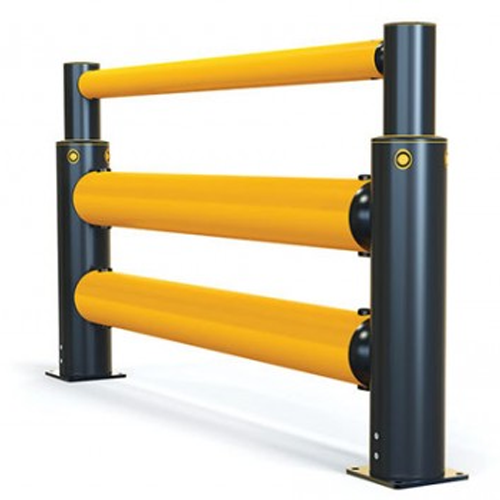
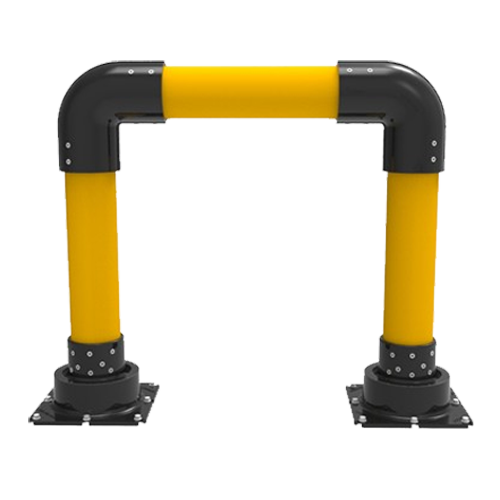
Flexible bollards or barriers can be used where vehicle guidance or stand-off protection is required around the loading area. A loading bay can therefore use several complementary protection systems:
- Dock bumpers at the vehicle-to-dock interface
- Bollards around exposed structures
- Barriers along protected boundaries
- Corner guards at vulnerable edges
- Traffic guidance for vehicle approaches
Each system addresses a different type of impact exposure. For example, the A-SAFE Bollard 130 is designed for vulnerable structures and vehicle guidance in confined areas, while its A-SAFE Traffic Barrier 190-T1-P0 is designed to protect infrastructure and guide vehicle movement.

Vehicle Alignment and Dock Protection
A dock bumper can only protect the area it is positioned to cover. Vehicle alignment therefore has a direct effect on how well the protection performs.
If a truck repeatedly contacts one side of the dock, misses part of the bumper or strikes an adjacent wall, the issue may not be the bumper itself. The approach should be reviewed for:
- Available reversing space
- Vehicle turning requirements
- Obstructions around the loading area
- Visibility for drivers
- Differences between vehicle types
- The position and height of existing protection
Keeping the approach clear can also help vehicles reach the dock more consistently. Unnecessary pallets, equipment or temporary storage around the reversing area can restrict the available approach and increase the likelihood of off-centre contact.
Common Applications for Dock Bumpers in Singapore
Dock bumpers can be used wherever commercial vehicles regularly reverse towards a fixed loading or unloading structure. Their application is particularly relevant in facilities with repeated delivery and dispatch activity.
In Singapore, these environments can include warehouses, logistics centres, manufacturing facilities and distribution operations.
Typical applications include:
Warehouse Loading Bays
Warehouses may receive incoming goods while also dispatching stored products. Repeated truck movements make the loading dock a regular vehicle-contact zone.
Logistics and Distribution Facilities
Distribution operations can experience frequent vehicle turnover throughout the day. Dock protection helps manage repeated interaction between different vehicles and the same fixed loading structure.
Manufacturing Facilities
Manufacturing sites may use loading bays for incoming materials and outgoing finished products. Dock bumpers can protect the interface where transport vehicles meet the facility.
Commercial Delivery Areas
Facilities receiving regular commercial deliveries may also use loading dock bumpers where vehicles reverse against a raised loading platform or similar fixed structure. The required bumper should correspond with the vehicles and dock configuration present at each facility.
Key Factors to Consider When Choosing Dock Bumpers
Choosing dock bumpers requires consideration of how vehicles interact with the loading bay. A bumper should be appropriate for both the structure and the expected contact conditions.
The selection process should begin with the vehicles using the dock. Consider these factors:
- Vehicle types: Identify the trucks and other vehicles regularly using the loading bay.
- Contact height: Determine where vehicles are expected to meet the dock protection.
- Loading frequency: Consider how often the dock receives vehicle traffic.
- Impact conditions: Review typical reversing speed and approach direction.
- Dock structure: Assess the mounting surface and surrounding loading equipment.
- Bumper dimensions: Ensure the protective area corresponds with expected vehicle contact.
For example, the D-Type range includes 100 mm, 150 mm and 200 mm height options, allowing the bumper dimensions to be considered alongside the actual dock and vehicle arrangement.
The objective is to provide protection where contact actually occurs. A durable bumper positioned incorrectly may provide limited protection to the intended structure.
Bumper Material and Impact Response
The construction of a dock bumper affects how it responds to repeated vehicle contact.
The D-Type Dock Bumpers are manufactured from fibre-reinforced prime rubber containing nylon and polyester. They are supplied with pre-drilled, countersunk mounting holes and are listed for indoor and outdoor protection applications, including commercial loading docks and warehouses.
The Molded Dock Bumper BS-DB-nn10 uses the same fibre-reinforced prime rubber construction with nylon and polyester. They have an impact recovery of 95%, a durometer reading of 80 ±5 and tensile strength of 950–1505 psi for this product. It is also supplied with pre-drilled countersunk holes for installation.
These specifications are useful when comparing products, but material selection should still be considered alongside the loading bay’s vehicle types, contact conditions and frequency of use.
Positioning Dock Bumpers Correctly
Dock bumpers should be positioned where they can intercept the normal rear contact points of vehicles using the loading bay. Correct positioning is fundamental to effective dock protection.
The bumper arrangement should account for the range of vehicles expected at the site. If contact heights vary considerably, the protection design may need to accommodate those differences.
Surrounding loading equipment should also be considered. Bumpers should protect the dock without interfering with doors, levellers or other components required for loading operations.
Positioning should be reviewed after installation. Wear marks can provide useful evidence of whether vehicles are contacting the intended protective area.
If vehicles repeatedly miss the bumper, the facility should investigate the approach and configuration rather than assuming that additional bumper material will automatically resolve the problem.
Maintaining a Safer Loading Area
Effective loading dock safety combines physical protection with controlled vehicle movement and regular inspection. Facilities should maintain clear vehicle approaches, visible markings and appropriate pedestrian routes.
Drivers should also have sufficient visibility and space when reversing. Useful measures include:
- Keeping approach areas clear
- Maintaining traffic markings
- Inspecting bumpers regularly
- Reviewing unusual impact patterns
- Protecting adjacent structures where necessary
These measures help address both the likelihood of accidental contact and its potential consequences.
Inspecting Dock Bumpers
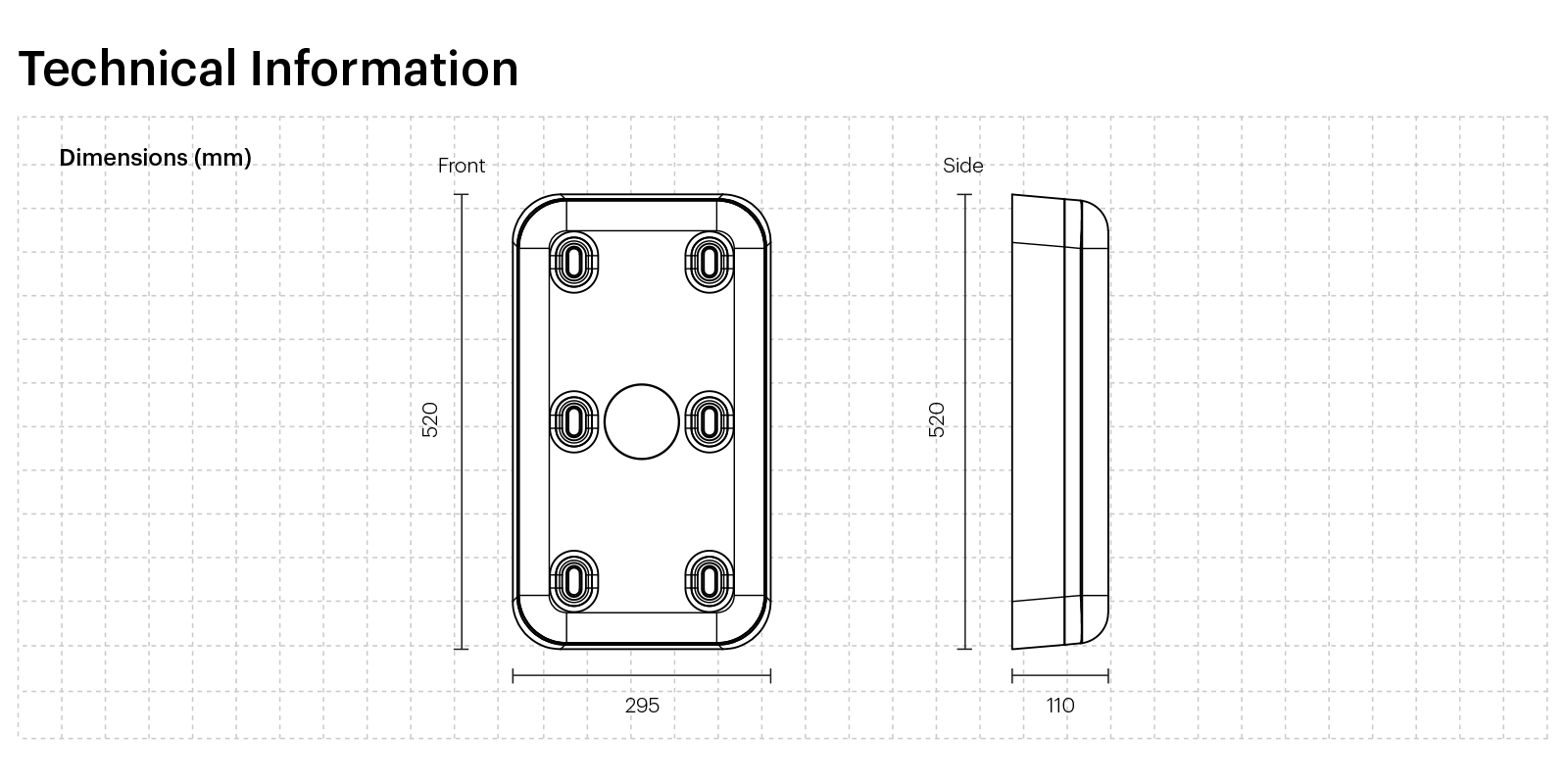
Dock bumpers should be inspected periodically and after unusual or substantial vehicle impacts. Regular checks can identify wear or damage before the protection becomes ineffective.
Inspection should consider whether the bumper remains securely positioned and whether its material has deteriorated or become excessively damaged. The mounting area should also be checked where appropriate. Repeated impacts can affect components beyond the visible bumper itself.
Unusual wear can provide information about loading bay operations. Damage concentrated on one side may indicate repeated vehicle misalignment, while frequent severe impacts may suggest that reversing behaviour requires review.
Dock Bumpers as Part of Loading Dock Safety
Dock bumpers form one part of loading dock safety because they primarily address vehicle-to-structure impact. Other risks around loading areas require different controls.
Reversing vehicles can interact with pedestrians, forklifts and surrounding infrastructure before they reach the dock. Traffic routes and access controls should therefore extend beyond the final loading position.
Physical protection may include bollards, barriers and structural guards around exposed areas. Operating controls can include defined reversing procedures, pedestrian routes and clear loading-zone management.
The combination should reflect how the facility actually operates. A loading dock with frequent heavy vehicle traffic may require a different protection arrangement from a smaller delivery area.
A coordinated approach helps ensure that dock bumpers perform their intended role within a broader warehouse safety system.
Frequently Asked Questions
What are dock bumpers used for?
Dock bumpers create a protective interface between reversing vehicles and a loading dock. They help absorb or cushion contact so the vehicle does not repeatedly strike the dock structure directly.
Where are loading dock bumpers installed?
Loading dock bumpers are generally installed on the dock face where the rear of a vehicle is expected to make contact. Their exact position should correspond with the vehicles and loading bay configuration.
Do dock bumpers stop trucks?
Dock bumpers are primarily designed to manage contact and protect the loading dock rather than function as a general vehicle-stopping system. Vehicle movement should already be controlled before the truck reaches the final dock position.
How do I know if a dock bumper is positioned correctly?
Contact and wear should generally occur within the intended protective area. Repeated contact outside the bumper can indicate that the vehicle approach, bumper position or loading bay configuration requires review.
Do dock bumpers require maintenance?
Dock bumpers should be inspected periodically for wear, damage and secure positioning. Facilities should also inspect them after unusual impacts or when changes in vehicle contact patterns are observed.
Protecting the Vehicle-to-Dock Interface
Dock bumpers help manage repeated vehicle contact at loading bays by providing a dedicated protective surface between vehicles and fixed structures. Effective vehicle impact protection depends on more than the bumper itself. Vehicle dimensions, contact height, alignment, loading frequency and surrounding structures should all be considered.
For warehouses and industrial facilities in Singapore, combining suitable dock bumpers with clear vehicle routes and additional protection where required can support safer and more controlled loading operations.
Assess the Full Loading Bay, Not Only the Dock Face
A loading bay should be assessed based on how vehicles actually move through it, not only where the rear of a truck meets the dock.
Uneven bumper wear, damaged corners, marks on walls or repeated contact with nearby structures can identify areas that require additional dock protection. Reviewing these points can help facility teams determine whether dock bumpers alone are sufficient or whether additional loading bay protection is needed.
Tysen Technologies provides dock bumpers, dock protection and loading bay protection products for loading and unloading areas, including D-Type Dock Bumpers and Molded Dock Bumpers. Our product range also consists of flexible bollards and traffic barriers for surrounding areas.
Contact us to discuss the requirements for your loading area and identify suitable dock protection and vehicle impact protection products.


