


Healthcare facilities often need to retain substantial volumes of information and operational materials while keeping them organised and accessible.Mobile archive shelving allows pharmacies, hospitals and other facilities to store records and supplies at higher density by reducing the number of permanently open shelving aisles.
In Singapore, where healthcare premises may need to balance clinical, administrative and storage functions within available floor space, compact shelving can provide a structured way to consolidate suitable stored items.
The suitability of mobile archive shelving depends on what will be stored, how frequently it needs to be accessed, security requirements, shelf dimensions and the facility’s daily workflow. High-density storage should therefore be planned around practical access and organisation rather than capacity alone.
What Is Mobile Archive Shelving?
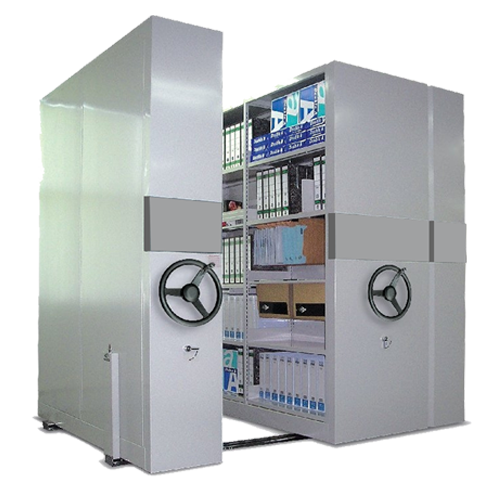
Mobile archive shelving is a compact storage system in which shelving bays are installed on movable bases rather than arranged entirely as fixed rows. The bays can be positioned close together when not in use and moved apart to create an aisle when users need access to a particular storage section.
Traditional archive shelving generally requires fixed access aisles between rows. Mobile archive shelving reduces this circulation space by allowing several rows to share an access aisle. A typical system includes:
Movable shelving bays for files, boxes or suitable supplies
Tracks or guidance mechanisms for controlled movement
Shelf levels configured around stored materials
Operating mechanisms for opening the required aisle
Labelling and access controls suited to the facility
Why High-Density Storage Matters in Pharmacies and Hospitals
High-density storage allows healthcare facilities to accommodate more suitable records or materials within a defined storage footprint. This can be useful where administrative archives and operational supplies compete with other functions for available space.
Hospitals and pharmacies can generate or retain different categories of documents and materials over time. Without structured records storage, increasing volumes can result in overcrowded shelving, inefficient filing and the gradual expansion of storage into areas intended for other activities.
Compact shelving can address the physical storage component by consolidating appropriate materials. It does not replace records management policies, retention schedules, inventory controls or digital systems.
The objective is therefore to use physical space more efficiently while maintaining appropriate access. A high-density layout is most effective when the contents are clearly classified and users understand where different materials are located.
Storing Medical Records and Archived Documents
Mobile archive shelving can provide organised physical storage for medical records and archived documents that a healthcare organisation has determined must be retained in hard-copy form. Files can be arranged by category, reference number, department, year or another classification system appropriate to the organisation.
Healthcare records require careful handling because they may contain confidential or sensitive information. Physical shelving should therefore form part of a wider records management approach that considers authorised access, retention, retrieval and secure disposal.
Archive shelving systems can be configured around different document formats. Shelf heights and depths should correspond with the dimensions of folders, archive boxes or other storage containers so that available shelf volume is not unnecessarily wasted.
Clear identification supports retrieval efficiency, consider the following:
- Numbering individual shelving bays
- Labelling shelves and document categories
- Separating active and archived records
- Maintaining a consistent filing sequence
- Restricting designated storage areas to authorised personnel
A well-organised filing system is important in compact storage so that users can identify the correct shelving location before opening an access aisle.
Mobile Shelving for Pharmacy Storage and Supplies
Mobile shelving can support pharmacy storage where the materials involved are suitable for shelving and the system can meet the facility’s access and environmental requirements. It may be used for selected records, packaged supplies, administrative materials and other appropriate items.
Pharmacy storage should be planned according to the characteristics of the items being stored. Products or materials that require specific temperature, humidity, security, segregation or handling conditions need storage arrangements that meet those requirements.
Compact shelving is therefore not automatically suitable for every pharmacy item. The decision should be based on the material, packaging, access frequency and applicable storage procedures.
Where mobile shelving is appropriate, shelf configuration can help organise different categories systematically. Adjustable shelf levels may accommodate cartons, files or packaged items of different dimensions while reducing unnecessary vertical gaps.
Making Better Use of Limited Floor Space
Mobile archive shelving makes better use of limited floor space by reducing the area dedicated to fixed aisles. The released space can allow additional shelving bays within the same room or reduce the footprint required for a defined storage capacity.
A conventional filing room may contain several rows of static shelves, each separated by an aisle. Those aisles remain open even when only one shelving row is being accessed.
Compact shelving changes the relationship between storage and circulation space. Shelving rows can remain positioned together until a user needs to retrieve something, at which point the relevant aisle is opened.
The basic differences are:
Storage Consideration | Fixed Archive Shelving | Mobile Archive Shelving |
Shelving rows | Stationary | Movable |
Aisle arrangement | Multiple permanent aisles | Shared access aisle or aisles |
Storage density | Limited partly by fixed aisle space | Higher-density configuration possible |
Floor-space use | More area reserved for circulation | More area can be allocated to shelving |
Access pattern | Several rows may be open simultaneously | Selected aisle opened when required |
The most appropriate configuration depends on room dimensions and operational requirements. A storage system should not compromise essential access simply to maximise shelf capacity.
Organising Records and Materials for Easier Access
Effective organisation allows users to identify and retrieve stored records or materials without searching through multiple shelving bays. Mobile archive shelving works best when the physical storage arrangement follows a clear classification system.
Healthcare facilities can categorise materials according to department, document type, retention period, frequency of access or another relevant operational structure. The classification should reflect how staff actually search for and return materials.
Retrieval frequency is particularly important. Frequently requested records should generally be positioned in areas that require minimal movement and handling, while long-term archives can occupy locations intended for lower-frequency access.
Shelf and bay labels should remain visible and consistent. If a facility uses a records database or inventory system, physical location codes can correspond with the digital reference so users can identify the correct shelving bay before entering the storage area.
Good organisation also supports accurate refiling. A compact system can save floor space, but its practical value declines if records are regularly returned to incorrect locations.
Safety and Access Considerations in Healthcare Facilities
Safety and controlled access are essential considerations when mobile shelving is used in healthcare environments. Shelving movement, aisle access, load distribution and authorised use should all be addressed during planning and operation.
Mobile bays should move in a controlled manner, and users should ensure that the intended aisle is clear before repositioning units. Floors and access areas should also remain free from objects that could interfere with movement or create hazards.
The following considerations are particularly relevant:
Access control: Storage areas containing confidential records or controlled materials should be limited to appropriate personnel.
Safe movement: Users should understand how to operate the shelving mechanism and check aisles before movement.
Load management: Materials should remain within the intended shelf and system load limits.
Clear access routes: The shelving arrangement should not obstruct required facility circulation or access points.
Routine inspection: Unusual movement, damaged components or obstructions should be identified and addressed appropriately.
Healthcare facilities should also consider their own internal safety, records management and operational requirements when determining how a mobile storage area will be used.
Shelf Configuration and Storage Requirements
Shelf configuration determines how efficiently mobile archive shelving accommodates specific records and materials. Shelf height, depth, bay width and load requirements should therefore be selected according to the actual contents rather than using a single standard arrangement for every application.
Document files may require relatively consistent shelf spacing, while archive boxes or packaged supplies may vary substantially in height. Adjustable shelf levels can provide flexibility where storage categories change over time.
Planning should begin with an inventory of the materials that need to be accommodated. Useful information includes the quantity, dimensions, weight, access frequency and expected future volume of each category.
For records storage, facilities should also consider whether active and inactive documents should share the same system. Separating them can make it easier to give frequently used records more accessible positions while using high-density sections for longer-term archives.
Shelf depth should be appropriate to the materials being stored. Excessively deep shelves can waste space or make smaller items harder to retrieve, while insufficient depth can prevent materials from being stored securely.
When Mobile Archive Shelving Is Suitable for Healthcare Facilities
Mobile archive shelving is suitable when a healthcare facility needs compact physical storage and does not require every shelving aisle to remain accessible at the same time. It is particularly relevant to organised collections of files, archives and suitable supplies with predictable dimensions and retrieval patterns.
A facility should assess both spatial and operational factors before choosing this type of system. High-density storage may be appropriate when floor space is constrained, but it may offer less operational benefit in areas where many staff need simultaneous, continuous access to different shelving rows.
Mobile archive shelving may be considered where:
A substantial volume of physical records must be retained
Existing fixed shelving uses considerable floor area for aisles
Stored materials can be systematically categorised
Access frequency can be accommodated by movable aisles
Appropriate security and operating controls can be implemented
Ensure to consider the complete storage process, not only the amount of floor space that can be saved.
Build High-Density Archive Storage Systems With Tysen Technologies
A high-density archive storage system should be designed around the available room, volume of stored materials, access requirements and expected changes in capacity. Tysen Technologies’ mobile shelving compactor provides a compact shelving approach for facilities seeking to reduce fixed aisle requirements and organise suitable records or materials within a defined storage area.
Planning starts with understanding what needs to be stored. Measurements of the room should account for doors, columns and other physical restrictions, while an inventory should establish the size, quantity and access frequency of the stored materials.
Healthcare facilities should also identify operational requirements before finalising a configuration. These can include staff access patterns, physical security, filing procedures and the need to separate different categories of records or supplies.
The resulting archive shelving system should provide an appropriate balance between storage density and practical retrieval. Increasing capacity is useful only when staff can continue to locate, access and return stored materials efficiently.
Frequently Asked Questions
What is the difference between mobile archive shelving and fixed archive shelving?
Mobile archive shelving places shelving bays on movable bases so rows can share an access aisle. Fixed archive shelving keeps every row stationary and generally requires permanent aisles between multiple rows.
Can mobile archive shelving be used for hospital medical records?
Mobile archive shelving can be used for physical medical records where the organisation determines that the storage arrangement meets its records management, security and access requirements. Confidential documents should remain subject to appropriate controls regardless of the shelving system used.
Is compact shelving suitable for pharmacy supplies?
Compact shelving may be suitable for selected pharmacy supplies when their dimensions, handling requirements and storage conditions are compatible with the system. Materials requiring specialised environmental conditions or particular security measures need to be assessed separately.
How does high-density storage increase archive capacity?
High-density storage reduces the floor area occupied by permanently open aisles and allows more of the available footprint to be used for shelving. Actual capacity depends on room dimensions, shelving configuration and access requirements.
What should a healthcare facility assess before installing mobile shelving?
A healthcare facility should assess room dimensions, material types, storage volume, retrieval frequency, security, user access, load requirements and future storage needs. Existing operational and safety procedures should also be considered when determining the layout.
Creating More Structured Healthcare Storage
Mobile archive shelving can help pharmacies and hospitals consolidate suitable physical records and materials by reducing fixed aisle requirements and increasing storage density. Its effectiveness depends on combining compact shelving with appropriate classification, access controls, shelf configuration and retrieval procedures.
For healthcare facilities in Singapore, the main consideration is not simply how much material can fit into a room. A suitable records storage system should make efficient use of available space while maintaining organised, controlled and practical access.
Consider the Requirements of Your Healthcare Storage Area
Healthcare storage needs to account for more than capacity, particularly when records, archived documents or different categories of materials require controlled and organised access. Tysen Technologies can help evaluate these requirements against an appropriate mobile shelving configuration.
Reach out to our team with details of the materials and storage area to discuss the most suitable shelving option for your workplace.


