

Tysen Technologies supplies rubber speed bumps and road humps in Singapore for traffic calming and vehicle speed management applications. Our range includes rubber speed bump solutions designed for suitable car parks, warehouses, industrial facilities, commercial buildings and other areas where vehicle speed needs to be managed.
Rubber speed bumps can help control vehicle speeds and improve traffic safety when installed according to the requirements of the site. Different speed bump heights and configurations can be selected depending on the type of vehicle, traffic conditions, installation environment and intended application.
Explore the available rubber speed bump products below or contact Tysen Technologies for assistance in selecting a suitable traffic safety solution.
… Load more-

Flexible Bollard/Delineator Post DH-EPFP
The EPFP removeable flexible bollard/delineator is made of High quality PU and it can easily return to its origin shape even after being run over by a heavy and fast moving vehicle. It is suitable for many traffic or parking areas, like streets, carparks and other public premises where there is a need to mark areas prohibited for vehicular access. Highly visible day & night.
-

Flexible Bollard/Delineator Post IRS.MP
Made in the USA, the MP FlexPost bollards/delineators post are used to channel traffic in order to enhance safety. Post an be mounted on selectable a fixed base or a quick release base. Yellow color post is standard and can be customized to include bands of a contrasting color reflective (adhesive) tape. (Note: The MP FlexPost is not to be used as a safety bollard)
-
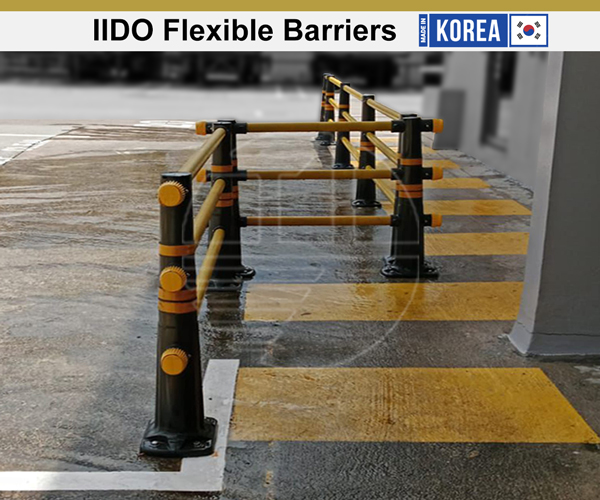
Flexible Pedestrian Barrier/Jay Walk Preventor ID311
Polyurethane (PU) Jaywalk-preventing flexible barriers, separate pedestrians from vehicular traffic.
-

-

Plastic Expandable Barrier with Wheels 3.4m DH-EB-1
DH-EB-1 expands quickly to a 3.4 meter wide barrier and can be deployed immediately for effective crowd management. The smart design also includes an interconnecting end column to join as many sections together as required.
-
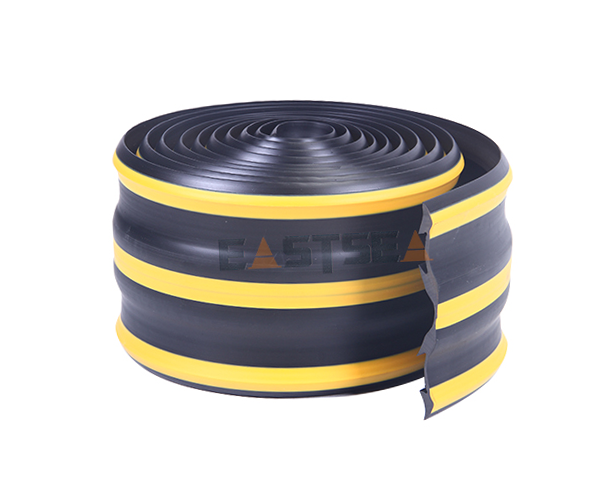
Rubber Strip Column Protector 5mL DH-CCG-1
DH-CCG-1 Rubber Column Protector is easily cut to the required length and fastened by screw directly to the round column concrete wall .The yellow stripes are molded for durability and would not fade in any harsh condition. Manufactured in 5000mm standard length.
-
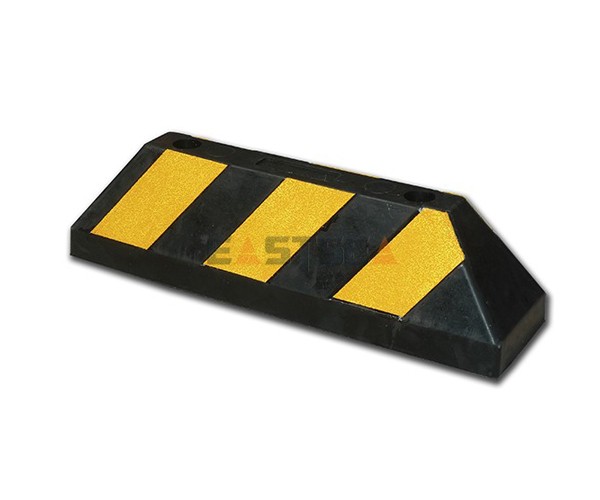
Rubber Truck Wheel Stopper DH-PB (150mmH)
DH-PB-7 and DH-PB-12 are truck wheel stoppers are highly visible and strong. Able to withstand harsh outdoor weather conditions.
-
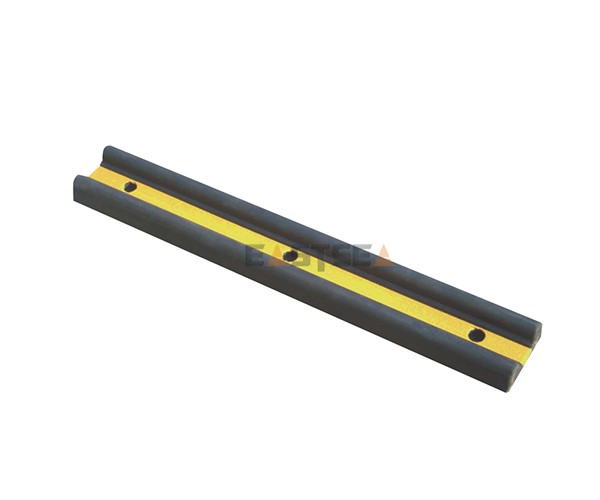
Rubber Wall Protector 1mL DH-WP-4
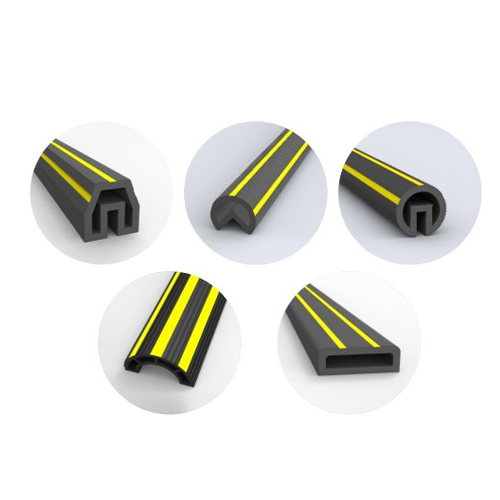
Rubber Wall Protector designed to keep walls free from the damage caused by vehicular, forklifts, pallet jacks, hand trucks and other mechanized traffic. Made from high-density polyethylene, it is able to absorb impact and keep walls free from scuffs, dents and chips.
-

Rubber Wall Protector 800mmL DH-WP-5
DH-WP-5 Rubber Wall Protector is extruded from specially formulated compound, blended with high grade PVC and Rubber, free from reclaimed PVC and Rubber or vulcanized waste. Designed to absorb impact energy and able to withstand extensive wear and abrasion from vehicular traffic, this heavy-duty rubber profile is cost-effective for the protection for walls, corners and columns in busy traffic areas.
-
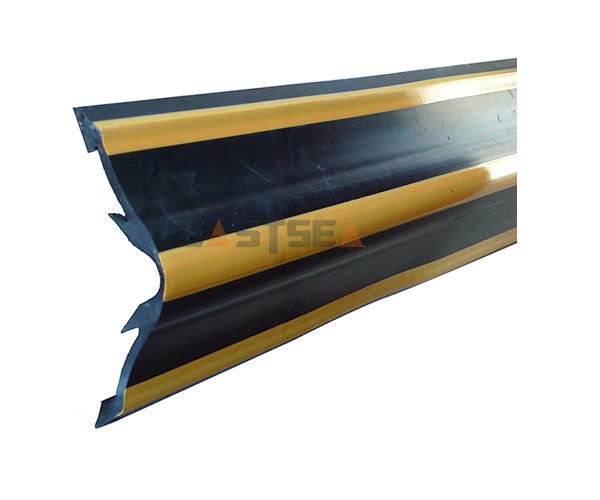
Rubber Wall Protector with Stainless Steel Retainer DH-EWP
Manufactured in 1000mm standard Length. Customized lengths are also available. Stainless Steel retainer is fastened directly to the wall with the EPDM cover easily snapped on. Easy to install and replace. End caps available to finish.
-
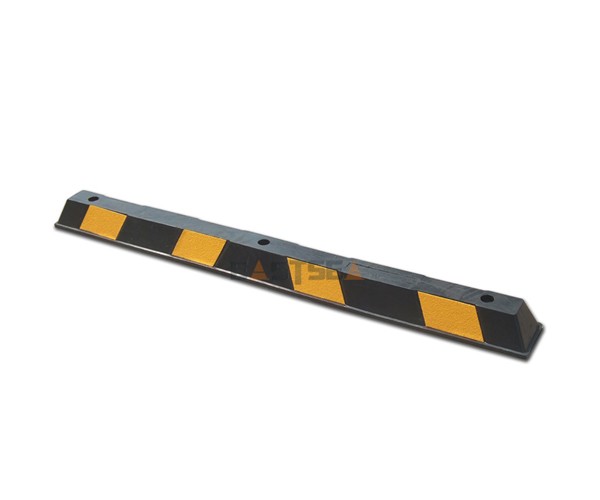
Rubber Wheel Stopper 1650mmL DH-PB-6 (100mmH)
1.65 meter long rubber wheel stopper is made not only to keep vehicle in its parking lot, it also serves to control traffic to prevent drivers from attempting to drive across to the opposite drive way through vacant lots. Durable and tough, the DH-PB-6 is made for harsh outdoor weather.
-

Rubber Wheel Stopper 1830mmL DH-PB-2 (100mmH)
The DH-PB-2 wheel stoppers are fabricated from premium quality Natural /EPDM rubber. They have high impact strength & are made to withstand harsh weather conditions. Solid coloring throughout without the need to paint. These stoppers will retain an attractive appearance for years of use
Rubber Speed Bumps and Road Humps
Although the terms speed bump and road hump are often used interchangeably, they are different types of traffic-calming devices. The main difference is the profile and length of the raised feature.
What Is a Speed Bump?
A speed bump is generally a shorter, more abrupt raised feature. Because the rise and fall occur over a relatively short distance, it creates a more noticeable vertical movement when a vehicle crosses it. This design is useful where a site operator needs drivers to reduce speed at a specific point, such as near a pedestrian route or at an entrance.
They can be used in locations such as car parks, warehouses and industrial facilities where controlled vehicle movement is required.
What Is a Road Hump?
A road hump generally has a longer and more gradual profile than a speed bump. The gradual rise and descent can provide a smoother crossing while still encouraging drivers to reduce their speed.
It is a raised section across a road used to reduce vehicle speeds. The appropriate height and configuration should be selected based on the site's traffic conditions and vehicle requirements.
Speed Bump vs Road Hump: Which One Do You Need?
| Feature | Speed Bump | Road Hump |
|---|---|---|
| Profile | Shorter and more abrupt | Longer and more gradual |
| Vehicle response | Creates a more immediate vertical movement | Provides a smoother transition |
| Typical application | Private roads, car parks and controlled premises | Roads and access routes where gradual traffic calming is required |
| Speed control | Encourages a sharper reduction in speed | Encourages slower, more consistent vehicle speeds |
| Selection factors | Height, length, vehicle type and site conditions | Profile, dimensions, design speed and site conditions |
The terminology is not completely uniform across countries or standards, therefore ensure to select a product based on the actual dimensions, rated speed, vehicle application and installation requirements.
Rubber Speed Bump Height and Speed Ratings
The height affects how the vehicle interacts with the raised feature and therefore which traffic-calming application may be appropriate.
50 mm Rubber Speed Bump – DH-SP-7
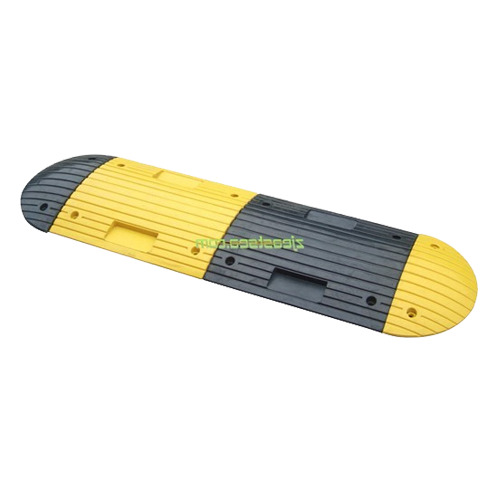
The DH-SP-7 is 50 mm high and is used to slow vehicular traffic to approximately 20 km/h. It is supplied as modular middle sections and end caps, allowing the installation to be configured across the required road width.
The DH-SP-7 has a 500 mm long by 400 mm wide middle section and 200 mm long by 400 mm wide end caps. It also features grooves for rainwater drainage, a skid-resistant base, black-and-yellow colouring for visibility and cat-eye reflectors.
This makes the 50 mm option suitable for applications where a moderate reduction in vehicle speed is required such as condominium and residential access areas.
75 mm Rubber Speed Bump – DH-SP-13
The DH-SP-13 is 75 mm high and can slow vehicular traffic to approximately 10 km/h. Its middle sections measure 500 mm long by 400 mm wide by 75 mm high, while the end caps measure 250 mm long by 400 mm wide by 75 mm high.
The product uses rubber construction, full load-bearing contact with the road and pre-coloured black-and-yellow modules. Because the product is rated for a lower crossing speed, the 75 mm option can be considered where stronger speed control is required such as warehouses and factories.
50 mm vs 75 mm Rubber Speed Bumps
| Model | Height | Material | Reflector Type | Vehicle Suitability | Installation Location |
|---|---|---|---|---|---|
| DH-SP-7 | 50 mm | Rubber | Cat-eye reflectors | Suitable for passenger vehicles and other appropriate vehicles where moderate speed reduction is required. Vehicle clearance and site requirements should be considered. | Condominiums, private car parks, commercial properties, schools, churches, and other controlled access areas |
| DH-SP-13 | 75 mm | Rubber | Pre-coloured black and yellow sections for visibility* | Suitable for applications requiring a lower operating speed. Vehicle ground clearance, wheelbase and product specifications should be checked, particularly where low-clearance passenger vehicles regularly pass. | Warehouses, factories, loading and unloading areas, industrial facilities, and other controlled low-speed environments |
Where Rubber Speed Bumps Are Used
Rubber speed bumps can be used in different environments where vehicle speed management and traffic calming are required.
Car Parks
Rubber speed bumps can help manage vehicle speeds within car parks and areas where vehicles and pedestrians operate close to one another.
Warehouses
Speed bumps can be used in suitable warehouse environments to help manage vehicle movement around operational and pedestrian areas.
Industrial Facilities
Industrial facilities may use traffic-calming products in areas where vehicle speeds need to be controlled around equipment, buildings, and pedestrian routes.
Commercial Buildings
Rubber speed bumps can help manage vehicle movement around commercial premises, parking areas, and access routes where appropriate.
Residential Roads
Where permitted and appropriate, traffic-calming products can be used to encourage controlled vehicle speeds on residential access roads.
Loading Bays
Speed management can be important around loading areas where delivery vehicles, equipment and pedestrians operate within the same environment.
How to Choose the Right Rubber Road Hump
Selecting the appropriate rubber road hump depends on the characteristics of the installation location and the vehicles using the area.
Vehicle Type
Consider whether the area is primarily used by cars, delivery vehicles, forklifts, trucks or other types of vehicles. Ground clearance, wheelbase, axle configuration and vehicle weight can affect how a vehicle crosses a raised feature.
Traffic Speed
Assess the typical vehicle speed in the area and the level of traffic calming required. The required speed reduction should be determined by the site's traffic conditions and safety objectives rather than simply choosing the highest available product.
Road Width
Consider the available road or access width to ensure the selected speed bump configuration is suitable for the installation area.
Installation Environment
Determine whether the product will be installed in a car park, warehouse, industrial facility, commercial area or another environment.
Public Road or Controlled Premises
This distinction is important in Singapore. LTA uses road humps and other traffic-calming measures as part of public-road infrastructure. A modular rubber speed bump should therefore not be presented as a universal substitute for an LTA-approved public-road traffic-calming treatment. For public roads or works affecting the public road reserve, the relevant authority requirements should be checked before installation.
Why Choose Rubber Instead of Concrete or Asphalt?
Rubber speed bumps offer a practical alternative to permanent concrete or asphalt traffic-calming features, especially for private and controlled premises. Their modular design makes installation and replacement more straightforward, while features such as contrasting colours, reflectors and textured surfaces can improve visibility and traction.
Concrete and asphalt humps are more permanent options that require construction as part of the road surface, making rubber a suitable choice when a site needs a flexible, modular traffic-calming solution.
Installation Guide for Rubber Speed Bumps
Before installing a rubber speed bump, assess the installation location, traffic conditions and vehicle requirements.
Select the Installation Location
Identify the area where vehicle speed needs to be managed and ensure the location is suitable for a speed bump installation.
Check Vehicle and Traffic Requirements
Consider the types of vehicles using the area and the expected traffic conditions before selecting the appropriate speed bump.
Confirm Product Dimensions
Check the product's height, width, length and other dimensions against the available installation area.
Follow the Product Installation Requirements
Install the speed bump according to the manufacturer's specified installation method and requirements.
Check Visibility
Ensure the installed speed bump can be clearly identified by approaching drivers and that any supplied visibility or reflector features are correctly installed.
Frequently Asked Questions (FAQs)
What is a rubber speed bump?
A rubber speed bump is a traffic-calming product designed to encourage vehicles to reduce speed in suitable areas. Rubber speed bumps can be used in environments such as car parks, warehouses and industrial facilities.
What is a rubber road hump?
A rubber road hump is a traffic-calming device designed to help manage vehicle speeds. Its suitability depends on the installation environment, vehicle types and required traffic-calming application.
What is the difference between speed bumps and speed humps?
Speed bumps and speed humps are both used for traffic calming, but their design and speed-control characteristics can differ. The appropriate solution depends on the location, traffic conditions and vehicle requirements.
Where are rubber speed bumps used?
Rubber speed bumps can be used in car parks, warehouses, industrial facilities, commercial buildings, loading areas and other suitable locations where vehicle speed management is required.
How do I choose the right rubber speed bump?
Consider vehicle type, traffic speed, road width, installation environment and whether the product will be installed indoors or outdoors. The manufacturer's product specifications should also be reviewed.
What height rubber speed bump should I use?
The appropriate speed bump height depends on the site, vehicle types, traffic conditions and intended application. Tysen Technologies' available models include different height configurations, including the 50mm DH-SP-7 and 75mm DH-SP-13.
Are rubber speed bumps suitable for warehouses?
Rubber speed bumps can be suitable for warehouse environments where vehicle speed management is required. The selected model should be appropriate for the vehicles, traffic conditions and installation environment.
Do you supply rubber speed bumps in Singapore?
Yes. Tysen Technologies supplies rubber speed bumps and road humps in Singapore for suitable traffic-calming and vehicle speed-management applications.
Rubber Speed Bumps in Singapore
Tysen Technologies supplies rubber speed bumps and road humps in Singapore for traffic calming and vehicle speed management applications. Our range can support suitable applications across car parks, warehouses, industrial facilities, commercial buildings and other areas where vehicle speeds need to be managed.
Looking for rubber speed bumps or road humps for your car park, warehouse or industrial facility? Explore the available products or contact us to discuss your requirements.
Request a Quotation for Speed Bumps and Road Safety Products