

A forklift turning too tightly can damage a doorway or vehicle reversing near machinery can turn a minor collision into costly equipment damage. These are the types of workplace risks that flexible polymer bollards are designed to address.
In warehouses, factories and manufacturing facilities, they provide a visible physical boundary while absorbing and deflecting impact energy when struck by workplace vehicles. Unlike conventional rigid bollards, flexible polymer bollards are designed to flex under suitable impact conditions and return towards their original shape after the force is removed.
The right protection, however, depends on what is being protected, the vehicles operating nearby and the type of impact that could occur.
What Are Flexible Bollards?
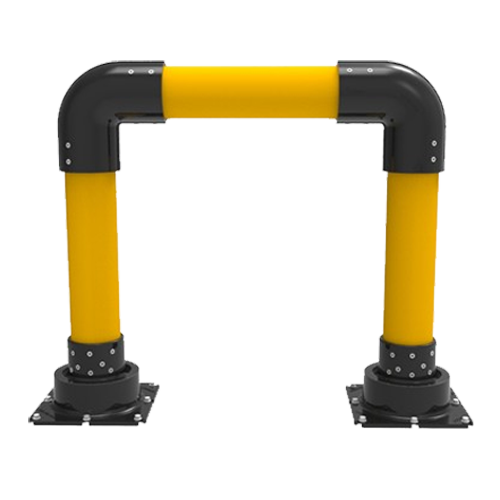
Flexible bollards are polymer safety posts designed to absorb and deflect impact from workplace vehicles. They can protect vulnerable structures and equipment while also providing a clear visual boundary around vehicle operating areas.
Their applications include:
- Protecting doorways and corners
- Protecting machinery and equipment
- Defining forklift routes
- Protecting exposed infrastructure
- Separating vehicle and pedestrian areas
The A-Safe Bollard 130, for example, is a compact, high-visibility bollard designed for confined spaces. It is ideal for protecting doorways, corners and equipment in warehouses, loading bays and tight operational zones as this product is designed to dissipate energy from low-speed impacts.
How Flexible Bollards Respond to Vehicle Impact
A flexible polymer bollard does not rely on remaining completely rigid when a vehicle strikes it. Instead, its construction allows it to flex, absorb, and deflect impact energy.
The A-Safe iFlex bollard, for example, is designed to absorb impact from material-handling equipment and return towards its original shape after the force is removed. It can be used around buildings, machinery and inventories affected by forklifts, pallet jacks, electric pallet trucks and trolleys.
The amount of impact energy a system can handle varies between products. The A-Safe iFlex 190Ø, for instance, has a nominal impact-energy absorption capacity of 6,900 J that can protect structures and equipment from impact damage while helping guide vehicles and workers.
This is why bollard selection should be based on the vehicle, impact conditions and asset being protected rather than simply choosing a product based on its appearance or size.
Protecting Vehicle Routes
Flexible traffic bollards can help define routes for forklifts, industrial vehicles and cars. Clear physical boundaries make it easier for drivers to identify where vehicles should travel. Flexible bollards can be positioned at:
- Changes in forklift direction
- Restricted-area entrances
- Narrow operational routes
- Approaches to pedestrian areas
- Turning and reversing points
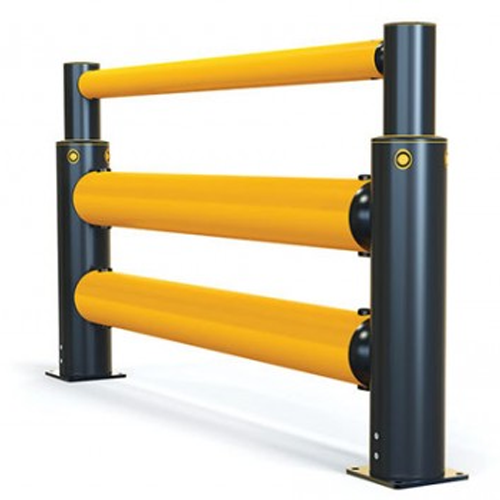
Where a longer physical boundary is required, a traffic barrier may be more suitable than individual bollards. Furthermore, bollard placement should leave enough clearance for vehicles to turn, reverse and manoeuvre safely.
Protecting Pedestrian Areas
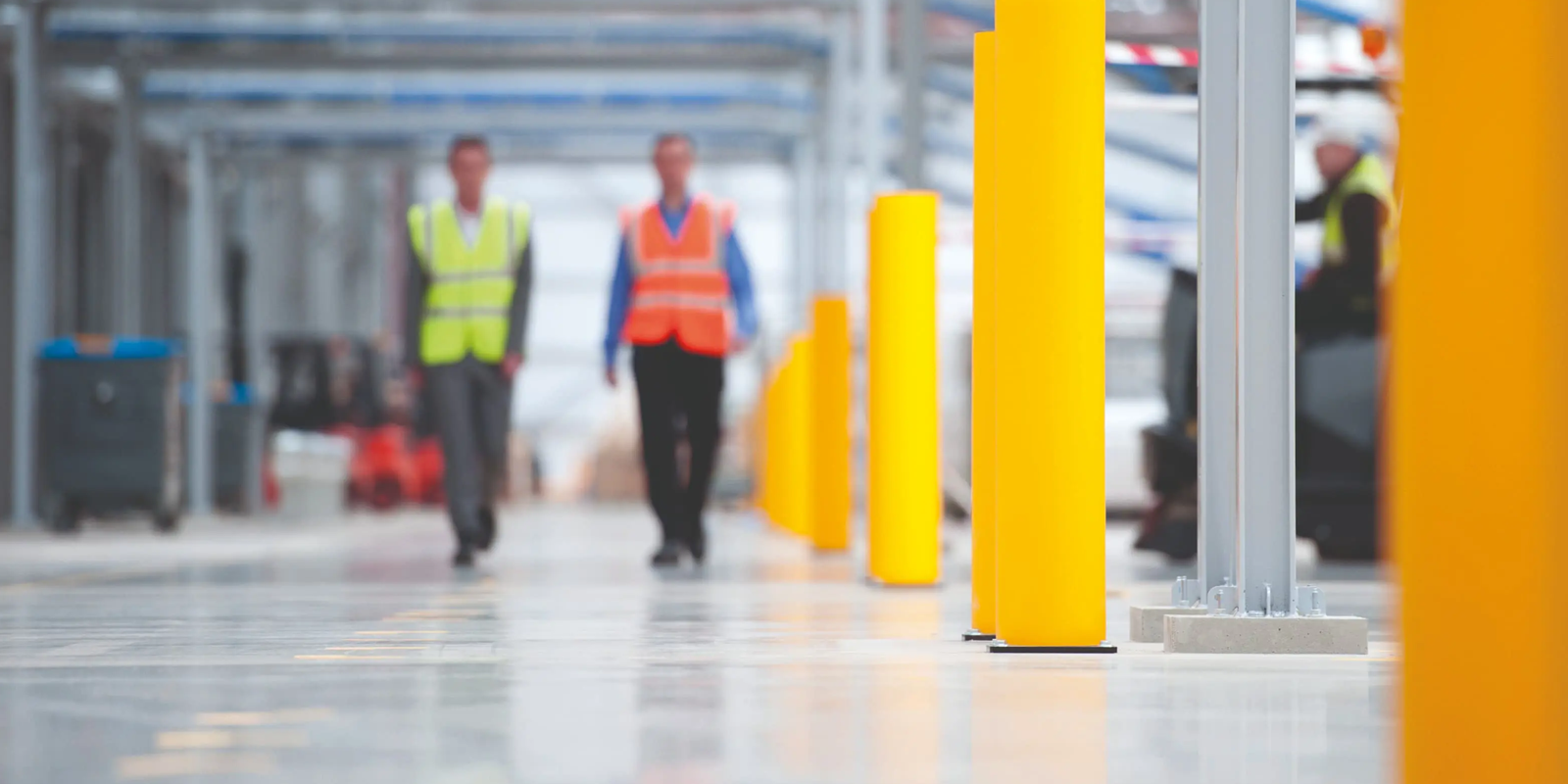
Flexible bollards can support pedestrian protection by helping establish a physical and visual distinction between walking areas and vehicle routes. Warehouses and industrial facilities can contain forklifts, pallet trucks and pedestrians moving through the same general environment. Defined pedestrian areas help make it clearer where people are expected to walk and where vehicles should operate.
Their visibility reinforces the boundary and can discourage vehicles from entering areas intended for people. However, the level of protection required should match the risk. Facilities should distinguish between guidance and physical segregation. Where direct vehicle impact with a pedestrian zone presents a significant risk, a barrier system designed for that impact condition may be more appropriate than relying on individual bollards alone.
Using Bollards as Part of Vehicle Segregation
Vehicle segregation involves separating vehicle routes from pedestrians and other vulnerable areas where practical. Facilities should first identify:
- Forklift routes
- Pedestrian walkways
- Loading areas
- Vehicle crossings
- Shared traffic zones
Flexible bollards can then reinforce these boundaries. Depending on the risk, they can be combined with floor markings and signs. For higher-risk areas, a barrier may provide more physical separation than individual bollards. The goal is to create clear movement patterns while providing protection where it is needed.
Warehouse Applications
Flexible bollards can be used in warehouses to define traffic routes and protect selected areas exposed to forklift or material-handling vehicle movement. Their compact footprint makes them particularly relevant at specific points where a larger barrier may not be necessary.
Potential warehouse applications include:
- Marking forklift route boundaries
- Protecting entrances to pedestrian zones
- Highlighting exposed corners
- Defining access around machinery or equipment
- Protecting selected structural features
Warehouse layout should be considered where bollards are positioned. The right bollard choice depends on traffic frequency, vehicle dimensions, turning movements and the assets being protected.
For example, to protect doorways, corners and equipment in confined areas, the A-Safe Bollard 130 provides a compact protection designed to dissipate energy from low-speed impacts.
Manufacturing Applications
Flexible bollards can help manufacturing facilities distinguish vehicle movement areas from production equipment, work zones and pedestrian access points. This is particularly relevant where forklifts or other industrial vehicles travel close to fixed operational assets.
Manufacturing layouts often combine several activities within the same facility. Materials may move between receiving areas, storage, production lines and dispatch zones while employees work nearby.
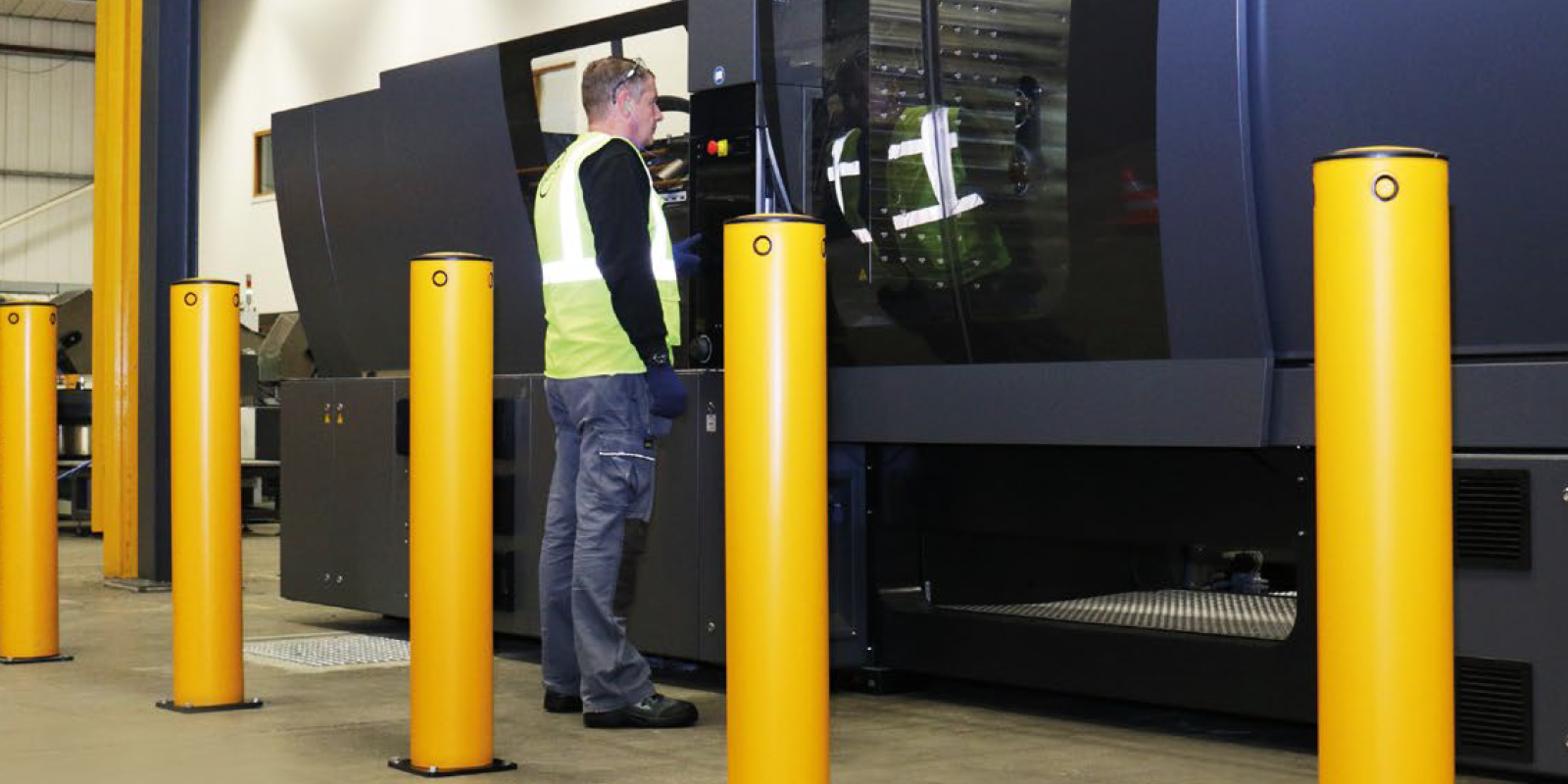
Flexible bollards can provide a visible physical marker around selected machinery, workstations or access points. They can also help guide vehicles through designated routes where space is shared with other operations.
Impact requirements should be considered carefully around valuable or critical equipment. If a collision could create significant consequences, the protection system should be selected according to the expected vehicle impact rather than visibility alone.
Flexible Bollards vs Rigid Bollards
Flexible and rigid bollards respond differently when struck by a workplace vehicle. Polymer bollards are designed to absorb and deflect impact, while rigid bollards rely on their structural strength and anchoring to resist the force.
Consideration | Flexible Bollards | Rigid Bollards |
Impact response | Deflect or flex under suitable impact | Primarily resist movement |
Energy management | Absorbs energy through controlled deformation | Transfers more force through rigid structure |
Post-impact condition | Can recover towards original position within design limits | May bend or remain deformed after sufficient impact |
Vehicle interaction | More progressive contact response | Typically more abrupt contact |
Mounting interaction | Flexibility can reduce concentrated force transfer | Greater force may reach anchors and floor |
Typical role | Guidance and suitable impact protection | Fixed protection where rigid resistance is required |
The choice should depend on the workplace application, vehicle movement and level of protection required.
Protecting Floors and Mounting Points
Rigid protection can transfer impact forces through its structure and anchoring when struck. Flexible polymer protection works differently by allowing controlled movement during impact, such as the use of A-Safe iFlex bollards around manufacturing equipment and structures to manage impacts from material-handling vehicles.
However, flexible construction does not remove the need for correct installation. The floor condition, mounting arrangement and product specification still need to suit the application. After a significant impact, the protection should also be inspected. Repeated impacts in the same location may indicate that the vehicle route or protection layout needs to be reviewed.
Choosing the Right Application
The right flexible protection depends on what is being protected and how vehicles move through the facility. A practical assessment can follow these steps:
- Identify the risk area: Determine whether the concern involves racking, machinery, infrastructure, pedestrians or vehicle routes.
- Review traffic behaviour: Look at forklift routes, turning points and reversing areas.
- Assess vehicle characteristics: Consider the type, weight and movement of vehicles operating nearby.
- Determine the protection level: Decide whether a bollard, rack protector, pedestrian barrier or traffic barrier is appropriate.
- Check available clearance: Make sure the protection does not interfere with normal vehicle or material movement.
This risk-based approach helps ensure that flexible traffic bollards are used where their characteristics match the site’s actual requirements.
Frequently Asked Questions
What is a flexible bollard?
A flexible polymer bollard is a safety post designed to absorb and deflect suitable vehicle impacts. In warehouses and factories, it can protect structures, equipment, doorways and other vulnerable areas.
Do flexible bollards return to their original position after impact?
Flexible bollards are designed to recover towards their original position following impacts within their specified performance limits. The exact behaviour depends on the bollard design and the severity of the collision.
Can flexible bollards be used around forklifts?
Flexible safety bollards can be used in forklift operating environments when the selected system is appropriate for the expected vehicle weight, speed and impact conditions. Placement should reflect actual forklift routes and manoeuvring areas.
Can flexible bollards protect pedestrians?
Individual polymer bollards can help protect specific access points and define boundaries, but continuous pedestrian segregation may require a dedicated barrier. The A-Safe iFlex P3R Pedestrian Barrier, for example, is specifically designed to segregate pedestrians from moving vehicles and workplace hazards.
Are flexible bollards better than rigid bollards?
The two types serve different applications. Flexible polymer bollards are designed to absorb and deflect vehicle impacts, while rigid bollards provide fixed resistance. The appropriate option depends on the workplace risk, vehicle movement and asset being protected.
Creating Clearer Boundaries Around Moving Vehicles
A forklift does not need to hit a wall at high speed to cause an expensive problem. Repeated contact with a rack, doorway or machine can damage infrastructure, disrupt operations, and require repairs.
Flexible polymer protection gives warehouses and factories another way to manage these everyday impact risks. Bollards can protect individual structures and access points, while traffic and pedestrian barriers can create longer physical boundaries around vehicle routes.
Warehouses, manufacturing facilities and car parks in Singapore should determine bollard placement according to actual traffic behaviour, vehicle type, route geometry, pedestrian movement and the assets requiring protection.
Identify the Boundaries That Need Physical Protection
Start by identifying where vehicles turn, reverse, pass close to infrastructure, or approach pedestrian areas. These locations can then be assessed for the most suitable protection.
Tysen Technologies supplies flexible bollards, safety barriers, and related impact protection solutions for industrial and commercial environments. Our range includes products such as the A-Safe Bollard 130, A-Safe iFlex Bollard, iFlex Traffic Barriers, and Pedestrian Barriers.
Contact us to discuss the traffic conditions and protection requirements for your facility.


