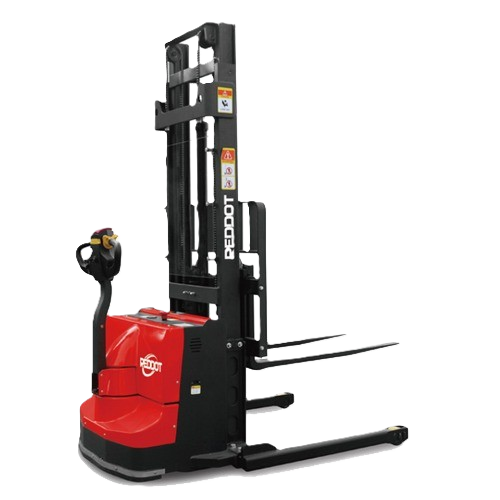
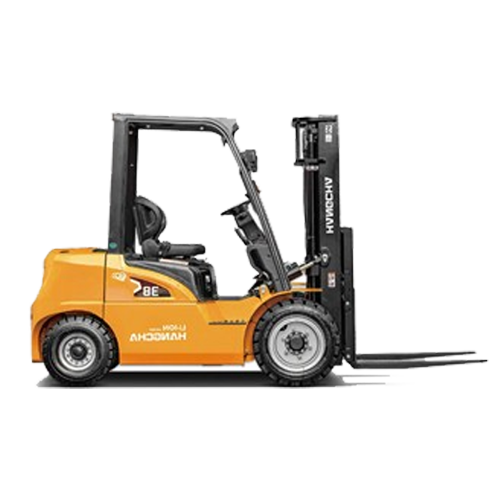
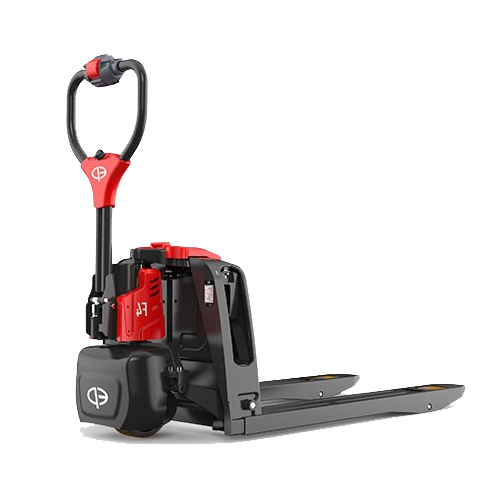

Lithium-ion batteries, known for their high energy density and relatively long lifespan, have become increasingly popular in various applications, including powering material handling equipment like our forklift trucks, reach trucks, stackers, and electric pallet trucks.
Lithium-ion technology offers many advantages, longer lifespan, faster charging, and higher efficiency. But like all high-performance systems, it requires responsible use.
By following the above guidelines, we can ensure safe, reliable, and long-lasting operation of our equipment.
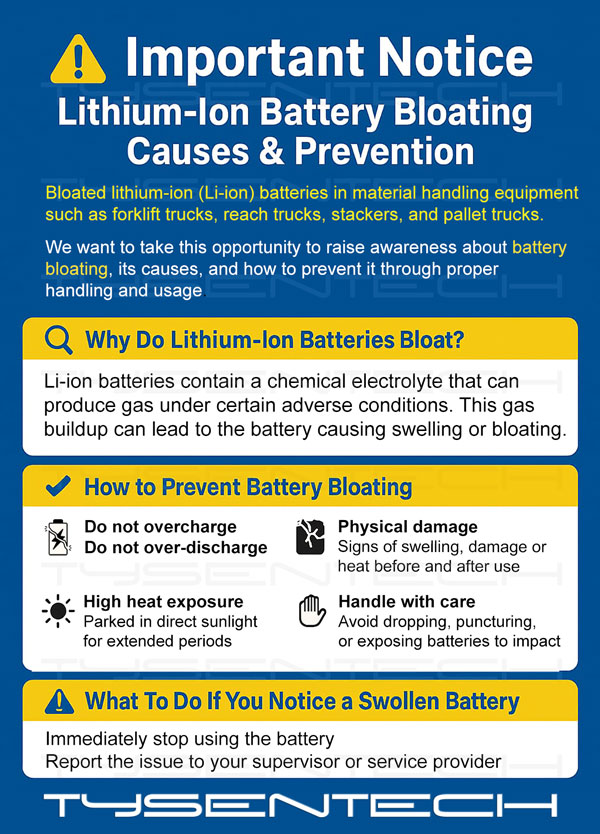
Why Do Lithium-Ion Batteries Bloat?
Unlike traditional lead-acid batteries, Li-ion batteries contain a chemical electrolyte that can produce gas under certain adverse conditions. This gas buildup can lead to the battery casing swelling or “bloating.” The most common causes include:
- Overcharging – Charging the battery beyond its capacity can cause chemical reactions that produce gas.
- Over-discharging – Allowing the battery to drain too deeply can also cause damage and gas generation.
- High temperatures – Leaving batteries in hot environments (e.g., parked under the sun) accelerates gas-producing reactions.
- Physical damage – Dropping or mishandling batteries may compromise their internal structure, leading to internal short circuits.
- Defective battery cells or charger – Poor quality components can result in chemical instability and unsafe operating conditions.
How to Prevent Bloating?
To ensure safety and prolong battery life, please follow these best practices:
- Always use the correct charger designed for your lithium-ion battery.
- Avoid extreme heat – do not leave equipment or batteries parked in direct sunlight for extended periods.
- Do not over-discharge – recharge batteries before they are completely drained.
- Do not overcharge – unplug the charger once the battery is fully charged.
- Inspect regularly – check for signs of swelling, damage, or heat before and after use.
- Handle with care – avoid dropping, puncturing, or exposing batteries to impact.
What To Do If You Notice a Swollen Battery?
If you notice any signs of swelling or bloating:
- Immediately stop using the battery.
- Do not attempt to charge or discharge it.
- Report the issue to your supervisor or service provider.
- Follow proper procedures for safe handling and disposal.