

Electric mobile shelving uses powered mechanisms to move shelving units and open the required access aisle, while manual mobile shelving relies on users to reposition the units mechanically. Both systems can support high-density storage by reducing the number of permanently open aisles required between shelving rows.
A facility choosing between manual and electric systems should consider storage volume, frequency of access, number of users, operating requirements, stored materials and the level of control required. Electric operation may be useful where frequent access or additional control features are important, while manual systems may remain suitable for straightforward applications with manageable access requirements.
For facilities in Singapore, the appropriate system depends on how storage functions within daily operations.
What Is Manual Mobile Shelving?
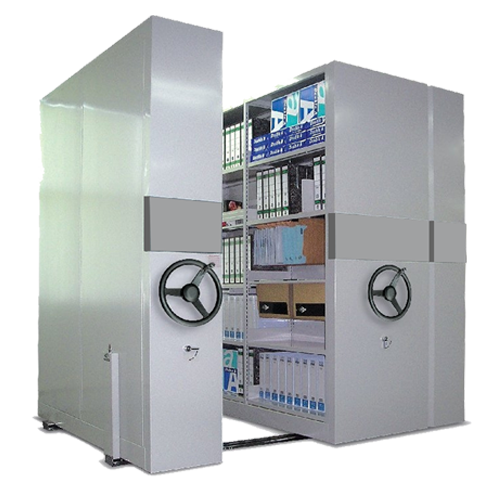
Manual mobile shelving is a compact storage system in which movable shelving bays are repositioned through user-operated mechanical controls. The units move along a guided track or base so that an access aisle can be created at the required shelving location.
Manual systems use the same fundamental space-saving concept as other forms of mobile shelving. Rows can remain positioned closely together when not in use, reducing the need for fixed aisles between every shelving bay.
Depending on the system design, users may operate a handle or another mechanical movement mechanism to reposition the units. The system is therefore dependent on physical user input rather than an electric motor.
Manual mobile shelving can be suitable for records, archives, documents and other compatible materials. Its suitability depends on factors such as load, shelving dimensions, access frequency and the physical characteristics of the storage area.
What Is Electric Mobile Shelving?
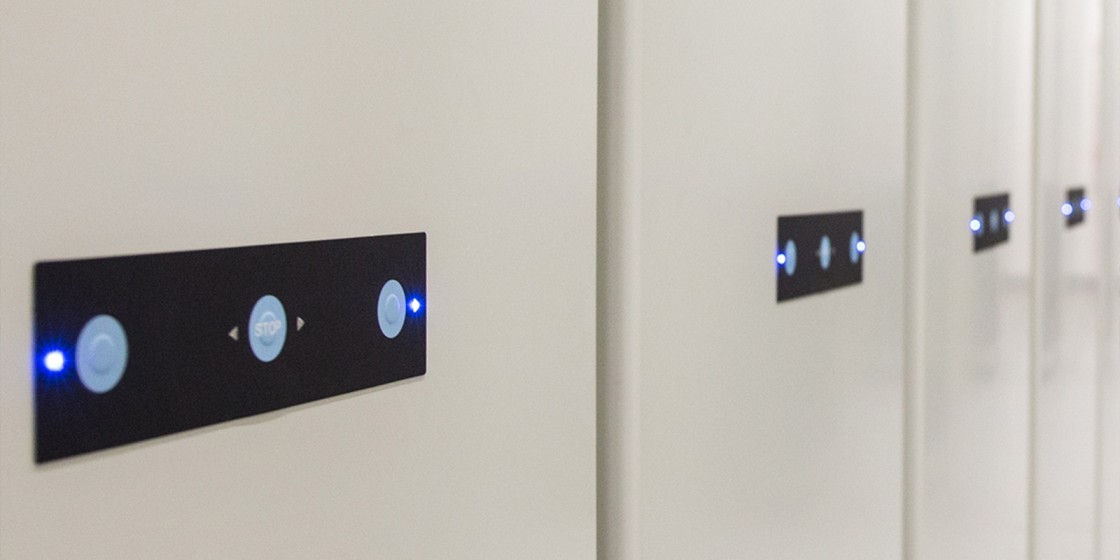
Electric mobile shelving is a high-density storage system that uses powered mechanisms to move shelving units and create access aisles. Users typically activate the required movement through an integrated control interface rather than manually repositioning the shelving.
An electric mobile shelving system retains the compact arrangement associated with mobile storage. Multiple rows can share an access aisle, allowing a greater proportion of the available floor area to be allocated to storage rather than permanent circulation space.
Motorised mobile shelving can also incorporate control functions associated with system movement and access. The exact features vary by product and configuration, so facilities should evaluate the available controls against their operational requirements.
Electric operation is particularly relevant where shelving is accessed regularly or where users would benefit from powered movement. It does not automatically make a system suitable for every facility; storage requirements and workflow still determine whether powered shelving is appropriate.
How the Two Systems Operate
Manual and electric mobile shelving differ primarily in how shelving rows are repositioned. Manual systems require mechanical input from the user, while powered mobile shelving uses an electric drive mechanism.
In both cases, the objective is to move one or more shelving units so that an aisle opens at the location users need to access.
The main operational differences can be summarised as follows:
Consideration | Manual Mobile Shelving | Electric Mobile Shelving |
Movement | User-operated mechanical movement | Powered movement |
User input | Physical operation required | Control-based activation |
Power requirement | Generally does not depend on electric drive | Requires power for motorised operation |
Access principle | Aisle opened where needed | Aisle opened where needed |
Storage approach | Compact, high-density storage | Compact, high-density storage |
Controls | Primarily mechanical | Can incorporate electronic control functions |
The operating method should be considered alongside the size and loading of the shelving. A system that works effectively for a relatively small archive may not provide the same user experience in a larger, frequently accessed storage facility.
Access and Daily Use
Daily access requirements are one of the most important factors when comparing manual and electric mobile shelving. The more frequently shelving rows need to be repositioned, the more significant the operating method becomes.
Manual systems can provide practical access where shelving movements are relatively straightforward and retrieval frequency is moderate. Users identify the required bay, operate the mechanical mechanism and create an aisle at the appropriate location.
Electric mobile shelving can reduce the physical input required to reposition shelving units. Users activate the system through its controls, after which powered mechanisms create access to the required section.
Facilities should assess actual retrieval patterns rather than relying only on total storage volume. Relevant questions include how often items are accessed, how many staff use the storage area and whether several sections are frequently accessed during the same working period.
The objective is to select a system that supports normal workflows. High-density storage provides less operational value if accessing everyday materials becomes unnecessarily complicated.
Storage Capacity and Space Efficiency
Both manual and electric mobile shelving can increase storage density by reducing the number of fixed aisles required between shelving rows. The choice of operating mechanism does not change this fundamental space-saving principle.
Storage capacity depends more directly on room dimensions, bay configuration, shelf dimensions, aisle requirements and the type of materials being stored. A well-planned manual system can therefore provide effective compact storage, just as an electric system can.
Facilities normally use mobile shelving in one of two ways. They can accommodate more shelving within an existing storage footprint, or they can maintain a required storage capacity while reducing the floor area occupied by the shelving installation.
The appropriate approach depends on the purpose of the space. An archive with increasing records may prioritise additional capacity, while an office reorganising its floor plan may aim to reduce the storage footprint.
Electric operation should therefore not be interpreted as inherently providing greater storage capacity. The layout and configuration determine density, while the operating mechanism primarily affects how users interact with the system.
Control and Safety Features
Control and safety features help ensure that mobile shelving moves in a predictable manner and that users can access stored materials appropriately. The available features differ between manual and electric systems and between individual product configurations.
Manual shelving typically depends on mechanical operation combined with appropriate user procedures. Staff should understand how to move the shelving correctly, ensure aisles are clear and avoid exceeding intended shelf or system loads.
Electric mobile shelving can incorporate electronic controls associated with movement and access. Depending on the system, these may provide additional ways to manage how the shelving operates.
When evaluating control requirements, facilities should consider:
How users initiate and stop shelving movement
How aisle occupancy is addressed during operation
Whether access to particular storage areas needs to be controlled
How the system responds to operational interruptions
What user training and procedures are required
Safety should be considered as part of the complete storage layout. Clear access routes, suitable loading, correct operation and regular inspection remain important regardless of whether the shelving is manual or electric.
When Manual Systems May Be Suitable
Manual mobile shelving may be suitable where storage requirements are straightforward and users can comfortably operate the shelving mechanism. It can support compact storage without requiring powered movement.
Facilities with moderate retrieval frequency may find manual operation appropriate, particularly where shelving units do not need to be repositioned continuously throughout the working day.
Typical circumstances where a manual system may be considered include:
Archives with predictable or lower-frequency retrieval
Storage rooms used by a relatively limited number of staff
File and document collections with straightforward organisation
Facilities where mechanical operation meets workflow requirements
Applications that do not require electronic operating controls
The decision should still account for the size and load of the mobile bays. Manual operation needs to remain practical for the people who will use the system regularly.
When Electric Systems May Be Suitable
Electric mobile shelving may be suitable where powered movement provides a practical advantage for frequent access, user operation or system control. Motorised movement can reduce the physical effort associated with repositioning shelving bays.
Larger storage installations or areas with regular retrieval activity may benefit from electric operation. The relevance depends on how often users need to open different aisles and how the system integrates with normal facility workflows.
Electric systems may also be considered where electronic controls are useful for the intended application. The specific capabilities should be assessed according to the selected system rather than assumed to be standard across all powered shelving.
Potential applications include corporate archives, institutional records storage and other facilities requiring organised high-density storage with frequent controlled access.
Powered operation should nevertheless serve a clear operational purpose. Selecting electric shelving solely because it is more automated does not necessarily improve storage efficiency if a simpler system already meets the facility’s requirements.
Comparing Mobile Shelving Requirements
Choosing between manual and electric mobile shelving requires an assessment of how storage is used rather than a comparison based on one feature. Facilities should first define their storage and access requirements, then determine which operating method supports them more effectively.
The following criteria provide a practical comparison:
1. Retrieval Frequency
Retrieval frequency determines how often shelving bays must be moved. Frequent daily movement may make powered operation more useful, while lower-frequency archive access may be adequately supported by manual shelving.
2. Storage Volume
Storage volume affects the number and dimensions of shelving bays required. Larger systems should be evaluated carefully to determine whether manual movement remains practical for regular users.
3. User Requirements
User requirements include the number of staff accessing the system and how they interact with stored materials. Facilities should consider whether physical operation is appropriate for expected users and workflows.
4. Control Requirements
Control requirements depend on the sensitivity and operational importance of the stored materials. Facilities needing additional system-based operating functions may need to assess the controls available with electric shelving.
5. Facility Conditions
Facility conditions include room dimensions, floor layout, available services, access routes and physical restrictions. Electric systems also require appropriate provision for their powered components.
A site assessment can help determine how these factors affect the practical configuration of either system.
Matching the System to Stored Materials
The type of material being stored influences shelving configuration regardless of whether the system is manual or electric. Files, archive boxes, packaged materials and other items can require different shelf depths, heights and load capacities.
Facilities should document the dimensions and approximate quantities of stored items before determining the shelving arrangement. This prevents capacity calculations from being based only on floor area.
Retrieval patterns also differ by material category. Active documents may be accessed throughout the day, while archived records may remain untouched for extended periods. These differences can influence both shelving position and the value of powered operation.
Adjustable shelving can provide flexibility when stored items vary in height. The overall configuration should still maintain appropriate load distribution and allow users to identify and retrieve materials efficiently.
Considering Workflow and Simultaneous Access
Workflow determines whether the access pattern of compact shelving is compatible with everyday operations. Because mobile shelving creates selected aisles rather than keeping every aisle permanently open, simultaneous access requirements need to be assessed carefully.
A facility where one or two users retrieve archived documents periodically may operate differently from a records centre where several employees continuously access different storage sections.
The number of open aisles required at a given time can affect the final layout. Higher storage density is not necessarily the correct objective if it creates delays for staff who regularly need simultaneous access to different shelving rows.
Manual and electric systems can both be planned around workflow requirements. Electric movement can simplify repeated repositioning, but the layout itself still needs to reflect how people use the storage area.
Planning for Long-Term Storage Needs
Long-term storage planning should consider expected growth, changes in material categories and future access requirements. A mobile shelving system is more useful when its configuration can continue to support the facility as storage needs evolve.
Current inventory provides the starting point, but facilities should also estimate whether record or material volumes are likely to increase. Shelf configuration and available capacity can then be planned with reasonable flexibility.
Changes in workflow may also influence the choice between manual and electric operation. A storage room with occasional access today may become more active if departments are consolidated or additional materials are moved into the area.
Reviewing these factors during initial planning helps avoid selecting an operating method based only on present conditions.
Frequently Asked Questions
What is the main difference between manual and electric mobile shelving?
The main difference is how the shelving units move. Manual systems require user-operated mechanical movement, while electric mobile shelving uses powered mechanisms controlled by the user to reposition shelving rows.
Does electric mobile shelving store more than manual shelving?
Not necessarily. Storage capacity is mainly determined by the room dimensions, number of shelving bays, shelf configuration and aisle requirements rather than whether the system is manually or electrically operated.
Is electric mobile shelving easier to access?
Electric shelving reduces the physical input needed to move shelving bays because movement is powered. Whether this provides a meaningful operational advantage depends on retrieval frequency, system size and user requirements.
Is manual mobile shelving suitable for archives?
Manual mobile shelving can be suitable for archives where retrieval patterns and shelving loads allow practical mechanical operation. The system should still be configured according to document dimensions, access requirements and expected storage growth.
What should facilities assess before choosing between manual and electric shelving?
Facilities should assess storage volume, retrieval frequency, number of users, shelving dimensions, stored materials, control requirements and available space. The final decision should reflect normal operational conditions rather than automation alone.
Choosing the Appropriate Operating Method
Manual and electric mobile shelving apply the same basic high-density storage principle but provide different methods of operation. Manual systems use mechanical user input, while electric systems use powered movement and may incorporate additional electronic control functions.
Neither option is universally better. Facilities should select the system that appropriately balances storage density, access frequency, user requirements, safety considerations and daily workflow.
For Singapore facilities evaluating compact shelving, understanding how the storage area will actually be used provides a more reliable basis for choosing between manual and electric operation than focusing on storage capacity alone.
Determine Whether Electric Operation Fits Your Workflow
The choice between manual and electric mobile shelving should reflect how often the system is accessed, who uses it and how shelving movement fits into daily operations. If powered operation is being considered, contact Tysen Technologies to review the facility requirements and determine whether an electric mobile shelving configuration is appropriate.


