
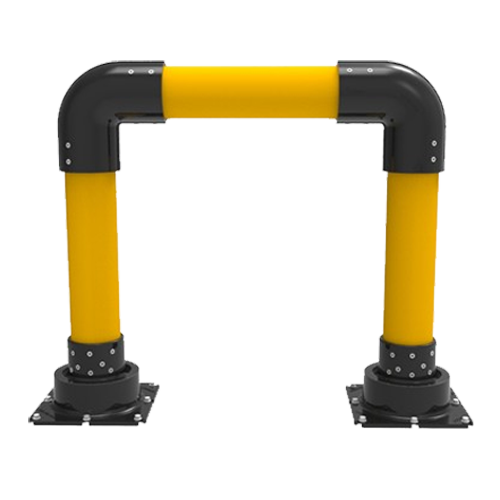

In a warehouse or distribution facility, a bollard may be positioned beside a rack, machinery, doorway or pedestrian route for a very specific reason: to keep moving equipment away from something that cannot afford to be hit.
Bollard selection is less about choosing a post that looks strong and more about understanding the vehicle movement, impact risk, and asset being protected. A forklift operating beside racking presents a different requirement from a bollard positioned at a pedestrian access point.
For businesses in Singapore, flexible safety bollards can form part of a wider impact protection strategy in warehouses, manufacturing facilities, logistics operations and other industrial workplaces. The right solution depends on where vehicles operate, what they could strike and how much protection the area requires.
Safety Bollards vs Safety Warning Bollards
Not every post used to manage vehicle movement is a safety bollard. A safety bollard is primarily a protective product. It creates a physical point of protection around vulnerable equipment, structures or defined areas and may be designed to absorb or deflect vehicle impact.
A safety warning bollard or warning post has a different role. It is generally used to make a boundary or restricted area more visible to drivers and pedestrians. It should not automatically be treated as a substitute for impact protection.
This distinction is important when selecting products. For example, the MP FlexPost is a flexible bollard/delineator used to channel traffic, but it is not to be used as a safety bollard. In an industrial facility where a forklift could physically reach a column, machine or other vulnerable asset, a warning post alone may not provide the required protection.
Start With the Risk Not the Bollard
The same facility can have several areas requiring different types of protection. A forklift travelling beside racking may present a repeated side-impact risk. A narrow doorway may require protection against vehicle contact at a specific approach point.
Before selecting a bollard, consider:
- What needs protection? Identify the equipment, structure, pedestrian area or access point at risk.
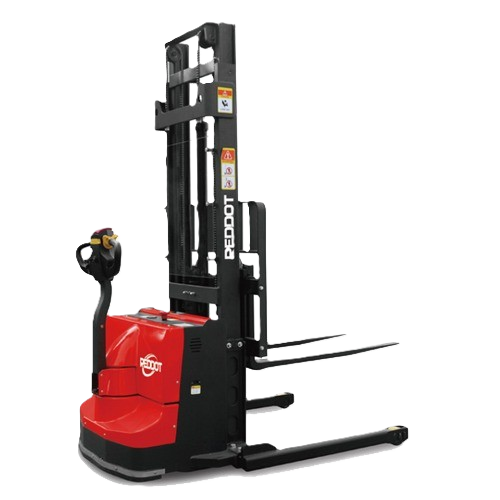
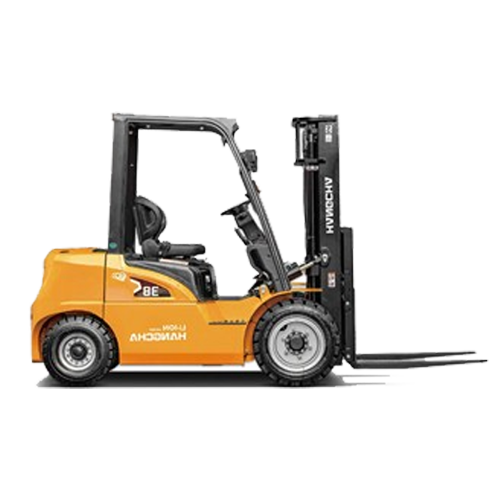
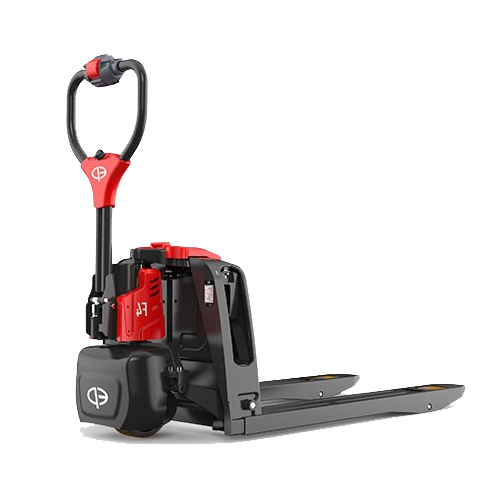
- Which vehicles operate nearby? Consider forklifts, pallet trucks, electric pallet trucks and other material-handling equipment.
- How do vehicles approach the area? Look at turning, reversing and straight-line movements.
- How severe could an impact be? Vehicle weight, load, speed and impact direction all matter.
- Does the area require a point or continuous protection? Individual bollards and barrier systems serve different purposes.
This prevents the common mistake of using the same protection arrangement throughout an entire facility.
Warehouse Applications in Singapore
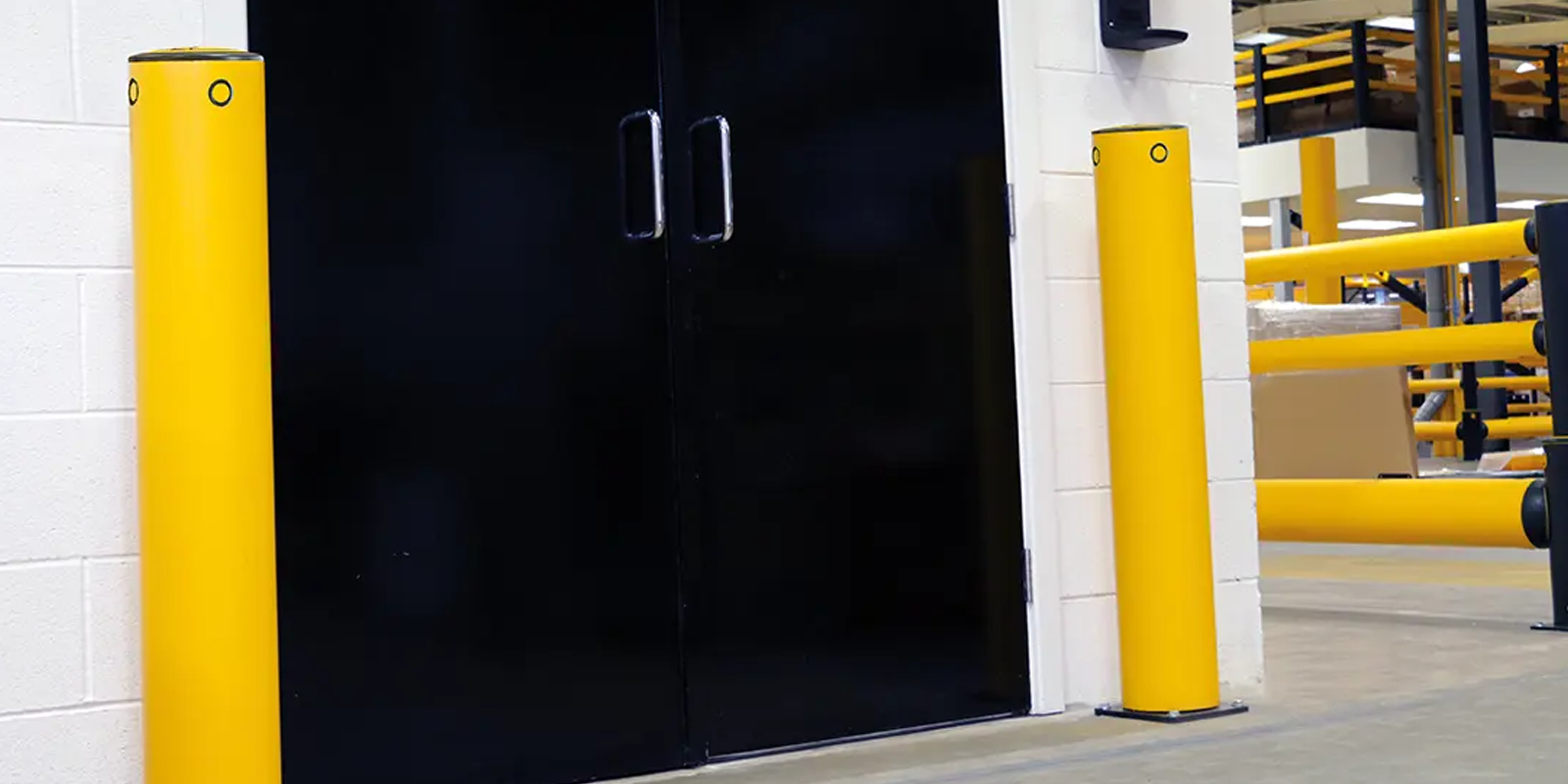
Warehouses in Singapore often have forklifts and other material-handling equipment moving through aisles, storage areas, loading zones and operational spaces. This makes certain infrastructure particularly exposed to accidental contact.
Flexible bollards can be used where localised protection is required around:
- Machinery and equipment
- Doorways and corners
- Exposed structural areas
- Access points
- Selected areas beside vehicle routes
The A-SAFE Bollard 130, for example, is a compact, high-visibility bollard designed to protect vulnerable structures and guide vehicle movement in confined spaces. It is ideal for warehouses, loading bays and tight operational zones.
The position of the bollard is just as important as the product itself. It should protect the vulnerable point without reducing the clearance required for forklifts and other equipment to operate safely.
Manufacturing and Production Areas
Manufacturing facilities can have vehicles moving between storage, production and dispatch areas, bringing them close to machinery, building structures and controlled work zones. Here, safety bollards may be used to create a buffer around exposed assets rather than relying solely on painted lines or visual markings.
The A-SAFE Bollard 190, for example, is a heavy-duty bollard, used for protecting infrastructure and assets such as machinery, buildings and vehicles. Its polymer construction is intended to withstand repeated everyday impacts without the same type of damage associated with rigid protection.
The appropriate configuration still depends on the actual operating conditions. A bollard should not be selected simply because it is described as heavy-duty; the expected vehicle and impact conditions need to be considered.
Protecting Equipment and Infrastructure
Equipment that remains fixed in position can become a repeated impact point when vehicles operate nearby. Columns, machinery, doorways and other fixed infrastructure may be exposed when forklifts or pallet-handling equipment manoeuvre through confined areas. Localised protection can be useful where the risk is concentrated at a particular corner or approach.
The A-SAFE iFlex 190Ø bollard is available in 835 mm, 1200 mm and 2000 mm height options. This bollard has a nominal impact energy absorption capacity of 6,900 joules, with an equivalent impact example of a 4.3-tonne vehicle travelling at 6.43 km/h at 90°.
These specifications illustrate why impact performance should be considered alongside the physical dimensions of the area. The product selected should correspond to the conditions it is expected to encounter.
Pedestrian Protection Requires More Than Visibility
Where pedestrians and industrial vehicles operate in the same facility, visual markings alone may not provide sufficient separation. Individual pedestrian bollards can help define access points or reinforce a boundary, but they do not create the same continuous separation as a pedestrian barrier.
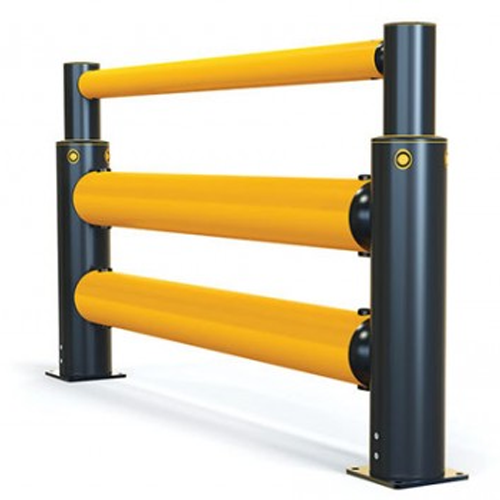
Where people regularly work beside forklift routes, a continuous system may therefore be more appropriate. Pedestrian barriers such as the A-SAFE 130-T0-P3, which is designed to segregate pedestrians from moving vehicles and workplace hazards, is a suitable option for warehouses, logistics centres, and manufacturing environments.
The key consideration is the level of separation required. A bollard can mark or protect a point, while a barrier can create a defined pedestrian route.
Traffic Bollards and Vehicle Guidance
Traffic bollards can have a role within an industrial facility where the objective is to define vehicle movement around specific operational areas. This can include:
- Marking the edge of a vehicle route
- Defining approaches to loading areas
- Guiding vehicles around fixed infrastructure
- Reinforcing boundaries between vehicle and operational spaces
However, a traffic bollard should not be confused with a warning delineator. A warning post may improve visibility and communicate where vehicles should travel, while a safety bollard is selected where physical impact protection is required.
For larger areas requiring continuous route definition or asset protection, a barrier may be more appropriate than a series of individual bollards. When selecting, ensure they are designed to protect infrastructure and guide vehicle movement in operational areas such as warehouses, factories and distribution centres.
How Flexible Bollards Manage Impact
Flexible safety bollards are designed to move when struck rather than remaining completely rigid.
The A-SAFE iFlex bollard, for instance, uses a polymer construction that flexes under impact and returns towards its original position after the force is removed. It can be used in Singapore manufacturing facilities to protect buildings, machinery and inventory from material-handling equipment such as forklifts, pallet jacks and electric pallet trucks.
This behaviour can be useful in industrial environments where accidental contact is possible. Instead of treating every impact as an event requiring the immediate replacement of a rigid post, a flexible system is designed around controlled movement and recovery.
However, flexibility does not mean that every flexible bollard is suitable for every vehicle or impact. The expected operating conditions still need to be matched to the product’s specifications.
Vehicle Type and Operating Environment
Vehicle type and operating conditions influence the required bollard configuration. Industrial sites may have forklifts, pallet-handling equipment, service vehicles and passenger cars operating in the same facility. Consider the following factors:
Factor | Why It Matters |
Vehicle type | Different equipment has different dimensions and movement characteristics |
Operating weight | Greater mass influences potential collision energy |
Typical speed | Higher speed increases impact energy |
Load dimensions | Loads can change clearance and driver visibility |
Turning behaviour | Influences likely contact points |
Traffic frequency | Repeated movement increases exposure opportunities |
These factors help determine whether a bollard is primarily needed for guidance, localised impact protection or stronger physical segregation.
When Bollards Are Not Enough
Individual bollards are useful for localised protection, but they are not a universal replacement for barriers. A few posts may be suitable around an exposed machine corner or doorway. However, a long section of vulnerable racking may need a barrier system rather than isolated bollards.
The type of protection you select should reflect the shape of the hazard. For example:
- Localised asset risk: individual safety bollards may be suitable.
- Pedestrian and vehicle interface: a pedestrian barrier may provide more continuous separation.
- Long vehicle-side boundary: a flexible barrier may provide broader protection.
- Visual route definition: a warning post or delineator may be appropriate where impact protection is not required.
This distinction helps prevent warning products from being used where physical impact protection is actually needed.
Choosing the Appropriate Bollard

Choosing the appropriate safety bollard requires matching the protective function with the expected traffic and impact conditions. The process should begin with risk identification rather than a particular product. Follow these steps:
- Define the protected area. Identify whether the concern is machinery, infrastructure, pedestrians or traffic guidance.
- Identify approaching vehicles. Consider vehicle type, weight, loads and operating speed.
- Review movement patterns. Determine where vehicles travel, turn and reverse.
- Establish impact requirements. Consider the likely direction and severity of accidental contact.
- Select the protection format. Decide whether individual bollards or a continuous barrier better addresses the risk.
- Confirm operating clearance. Ensure the protection does not interfere with normal vehicle or pedestrian movement.
This approach can result in different bollard configurations within the same facility. Applying one solution everywhere may overlook important differences between risk areas.
Frequently Asked Questions
What are safety bollards used for?
Safety bollards are used to provide physical protection around vulnerable equipment, infrastructure and selected workplace areas where vehicle impact is a risk.
What is the difference between safety bollards and safety warning bollards?
Safety bollards are intended to provide physical protection, while warning bollards or delineator posts primarily improve visibility and communicate boundaries or vehicle routes. A warning post should not automatically be treated as an impact-protection product.
When should bollards be replaced by a barrier?
A barrier may be more appropriate when a continuous physical boundary is required, such as along a pedestrian route or beside an extended area of vulnerable infrastructure.
Can flexible safety bollards be used around forklifts?
Flexible safety bollards can be used in forklift environments when their impact performance is appropriate for the vehicle and operating conditions.
How should facilities decide where safety bollards are needed?
Facilities should review vehicle routes, turning areas, pedestrian movement and vulnerable infrastructure to identify likely impact points. Protection should then be selected according to the risk at each location rather than installed uniformly across the site.
Matching Bollard Protection to the Application
Safety bollards can serve several functions within industrial facilities, but their effectiveness depends on selecting them for the specific operating environment. Machinery protection, pedestrian segregation and traffic guidance each create different requirements.
Vehicle characteristics are particularly important. Forklift weight, operating speed, turning behaviour and traffic frequency affect the potential impact that a bollard may need to manage.
For warehouses and manufacturing facilities in Singapore, a risk-based selection process can help determine where safety bollards are appropriate and where continuous barriers or other impact protection systems may provide a better fit.
Define the Protection Requirement Before Selecting the Bollard
The right safety bollard should work with the way a facility actually operates. Vehicle type, traffic movement, impact conditions and the asset being protected all influence the selection.
Tysen Technologies provides flexible safety bollards, pedestrian barriers and related impact protection systems for industrial applications. Products include A-Safe bollards, flexible traffic barriers, pedestrian barriers, and rack protection systems.
If you are reviewing available protection options for your facility, contact Tysen Technologies to discuss the right product for your needs.


