

A motorised pallet truck becomes worth considering when manual pallet movement no longer matches the volume, distance or physical demands of daily warehouse operations. The decision is usually driven by changes in workload rather than by the age of the existing manual pallet jack.
This is particularly relevant for warehouses in Singapore, where receiving, storage, picking and dispatch activities often need to work within defined floor areas and shared operating routes. The Workplace Safety and Health Council also highlights the need for good warehousing practices around moving machinery, loading and unloading activities and storage areas.
The decision to move from manual to powered equipment should therefore be based on the actual workflow rather than simply the age of the existing pallet jack. Movement frequency, load weight, travel distance, floor conditions, available space and battery requirements all need to be considered.
How Does a Motorised Pallet Truck Work?
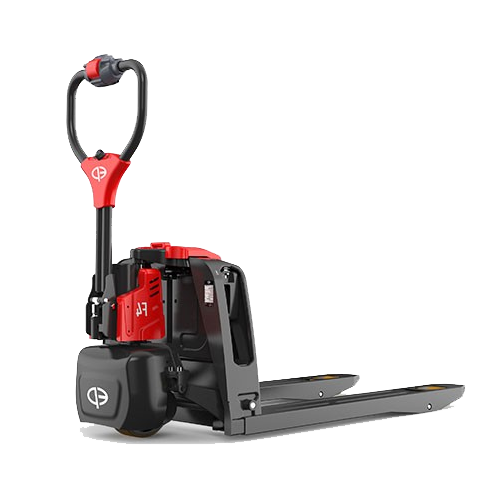
A motorised pallet truck is powered material-handling equipment designed mainly to move palletised loads horizontally. Depending on the model, electric power can assist both travel and lifting, reducing the amount of force the operator needs to provide manually.
The equipment may also be described as a motorised pallet jack or electric pallet truck. The main difference from a manual pallet truck is the method of movement. A manual pallet jack relies on the operator to pull or push the loaded truck. A motorised model uses an electric drive system, while the operator controls the direction, travel and positioning of the equipment.
For example, the EPT20-15ET is a 1.5-ton full electric pallet truck with power lift, power drive and electric power steering. It has a 1,500 kg nominal load capacity, 1,150 mm forks and an internal charger.
This type of specification matters because choosing powered equipment is not simply about selecting the largest available capacity. The truck still needs to match the pallet dimensions, load characteristics and routes used within the facility.
Signs Your Warehouse May Need Electric Pallet Handling
A warehouse may need electric pallet handling when manual transport starts to become a recurring limitation in normal operations. These signs are often easier to identify by observing how pallets move throughout the day.
Increasing pallet volume is one indicator. A manual pallet jack that was sufficient when only a small number of pallets were transferred each day may become less practical when receiving, replenishment and dispatch movements increase.
Travel distance is another consideration. A warehouse may have expanded its storage area, changed its layout or increased the distance between receiving and dispatch. Even when each individual movement is manageable, repeated trips can make manual transport a more significant part of the working day.
Businesses should consider reviewing their handling method when they observe:
- More frequent pallet transfers during normal operations
- Longer travel between receiving, storage and dispatch areas
- Increasing physical effort associated with routine movement
- Delays caused by repeated manual pallet transport
- Changes in load characteristics or warehouse layout
These indicators do not automatically mean powered equipment is required. They show that the existing handling process should be reassessed.
Handling Frequent or Heavy Pallet Movement
Frequent pallet movement can be a stronger reason to consider a motorised pallet truck than the weight of a single load alone. Repeatedly moving loaded pallets requires the handling method to remain practical throughout the working shift.
For example, a manual pallet jack may be suitable for occasional movement between adjacent areas. A warehouse that regularly transfers pallets from receiving to storage may have different requirements.
Load weight also affects the handling requirement. Heavier goods generally require more effort to start, manoeuvre and position manually, particularly when movements are repeated. Businesses should examine both weight and frequency rather than treating them as separate issues.
Handling Pattern | What to Consider |
Light, occasional pallet movement | Manual handling may remain practical |
Frequent pallet movement | Powered travel becomes more relevant |
Heavier regular loads | Review operator effort and equipment capacity |
Longer repeated transfers | Consider motorised pallet transport |
High-volume material flow | Assess equipment availability and workflow needs |
The appropriate equipment must still have sufficient rated capacity and be compatible with the pallets being transported.
Reducing Physical Effort During Pallet Handling
A motorised pallet truck changes how operators move loaded pallets by providing powered travel rather than relying primarily on manual pushing or pulling. With a manual pallet jack, the effort required can vary depending on the load, floor surface, route and manoeuvring involved. Repeated movements can make these factors more significant over the course of a working shift.
Powered travel does not remove all physical demands from pallet handling. Operators still need to steer the truck, position the load, monitor the route and respond to surrounding activity. However, the electric drive takes over much of the effort associated with moving the truck itself.
This can be relevant when the same routes are repeated throughout a working day. Singapore’s Workplace Safety and Health Council identifies physical workloads and manual handling as relevant workplace ergonomics considerations and references SS 569, the Code of Practice for Manual Handling.
Businesses should therefore look at where physical effort occurs in their actual workflow rather than assuming that every manual pallet movement needs to be replaced.
Improving Warehouse Workflow
A motorised pallet truck can support warehouse workflow when horizontal pallet transport is a recurring part of the movement process. Consider a typical sequence in which goods arrive at receiving, move to a staging area and then enter storage. Later, completed orders may need to travel from picking or storage areas to dispatch.
If pallets are repeatedly transported across these routes, the handling equipment becomes part of the overall workflow. Powered equipment can make these recurring transfers less dependent on operator-generated travel force. However, it does not automatically resolve other causes of delay.
For example, if pallets are waiting because of stock identification, picking, documentation or loading processes, changing the pallet truck will not address the underlying bottleneck.
The better approach is to identify where transport itself is slowing the process. If horizontal movement is consistently taking up time or creating repeated manual effort, a powered pallet truck may be worth assessing.
When Warehouse Growth Changes Equipment Requirements
Warehouse growth can change material-handling requirements even when the products and pallets remain the same. A business may initially operate from a relatively compact facility where manual pallet movement is sufficient. As inventory levels increase or additional storage and staging areas are introduced, pallets may have to travel further between operational zones.
The same can happen when delivery schedules become more frequent. More inbound and outbound activity can increase the number of pallet movements without changing the physical characteristics of each load.
For Singapore businesses, this makes equipment planning extremely important as the available warehouse space needs to support several activities within the facility. An equipment review should therefore accompany significant changes to storage layout, inventory volume or material flow. The objective is not to replace every manual pallet jack, but to determine whether the existing equipment still suits the workload.
Warehouse Size and Operating Conditions

Warehouse size influences the suitability of a motorised pallet truck, but floor area alone does not determine whether powered handling is appropriate. A smaller warehouse with frequent pallet transfers may have a greater need for powered equipment than a larger facility where pallets move only occasionally.
The routes themselves are also important, this is why businesses should consider:
- aisle width
- turning space
- doorways and entrances
- floor condition
- changes in floor level
- intersections with other warehouse traffic
- pedestrian movement
- the distance between receiving, storage, and dispatch areas.
Equipment dimensions should be checked against the actual operating environment rather than relying only on nominal capacity. For example, the STAXX EPT15H is a 1.5-ton lithium full electric pallet truck with a 65 mm fork height and compact body. It is suitable for retail environments and narrow working spaces, with an upright driving mode and removable batteries.
This makes configuration an important part of equipment selection. A compact electric pallet truck may be more relevant to a restricted route, while a high-capacity rider truck may be more suitable for longer or more demanding pallet movements.
Manual Pallet Trucks vs Motorised Pallet Trucks
Manual and motorised pallet trucks perform similar basic horizontal transport functions, but they are suited to different operating demands. Comparing them according to workload can help businesses determine when a transition is appropriate.
Consideration | Manual Pallet Truck | Motorised Pallet Truck |
Travel power | Primarily operator-generated | Electric drive |
Typical movement | Shorter or occasional transfers | Frequent or longer transfers |
Physical effort | Greater reliance on pulling and pushing | Reduced reliance on manual travel force |
Battery charging | Not required | Required |
Operating controls | Relatively simple manual handling | Powered travel controls |
Best-fit workload | Lower-frequency movement | Repetitive pallet transport |
Neither option is automatically appropriate for every warehouse. The practical choice depends on the material-handling workload and operating environment.
A business may also use both types. Manual pallet trucks can remain useful for occasional local movements while motorised equipment handles higher-frequency transport routes.
Identifying Pallet-Handling Bottlenecks
Pallet-handling bottlenecks occur when the movement of goods cannot keep pace with the surrounding warehouse process. For example, pallets may accumulate in a receiving area because they are not being transferred to staging quickly enough. Completed orders may also remain in a picking area when dispatch pallets require repeated movement across a longer route.
Businesses should observe where pallets are waiting and identify the reason. If the delay comes from picking, stock identification, documentation or loading, changing the pallet truck may not solve the problem. If transport itself is consistently limiting the movement of goods, powered equipment becomes more relevant to the discussion.
A simple review can track the most common pallet routes during a normal operating period. This can reveal whether the same movements are being repeated enough to justify a change in equipment.
Battery and Charging Considerations
Switching from a manual pallet jack to a motorised pallet truck introduces battery management into the operation. The battery system needs to support the expected pattern of use, including travel frequency and operating duration. Businesses should also understand how the selected model is charged and whether batteries can be removed or swapped when required.
For example, the EPT20-15ET uses a 2 × 12V/85Ah GEL battery configuration with an internal charger. The EPT15H uses a 48V 15Ah lithium battery and an external charger, with the battery designed to be removable for charging.
These differences can affect how equipment fits into a warehouse’s daily schedule. Charging arrangements should also be planned around the working environment. The charging location, equipment access and battery-handling procedures should be considered before the truck is introduced.
Evaluating the Change Before Switching
A business should evaluate its current pallet-handling workload before switching to motorised equipment. The assessment should start with how pallets actually move rather than with a particular truck model.
A practical review can examine:
- Daily pallet movements: Estimate how frequently pallets are transported.
- Typical travel distance: Identify the routes used most often.
- Load characteristics: Review common and maximum pallet weights.
- Operator effort: Consider where repeated manual movement is most demanding.
- Workflow delays: Identify whether pallet transport contributes to waiting or congestion.
- Operating environment: Check whether routes can accommodate powered equipment.
These factors can then be compared with available motorised pallet truck configurations.
When an Electric Pallet Truck Makes Sense
An electric pallet truck makes sense when powered horizontal movement addresses a recurring requirement within the warehouse. A typical example is a facility where pallets remain at floor level while goods move between receiving, staging, storage and dispatch. If these transfers occur frequently, an electric pallet truck can provide powered travel without introducing the lifting function of a stacker.
The choice still needs to match the application. The EPT20-15ET, for example, provides a 1,500 kg nominal capacity with power lift, power drive and electric power steering. Its 1,150 mm forks and 560 mm/685 mm external fork widths also need to be considered against the pallets being handled.
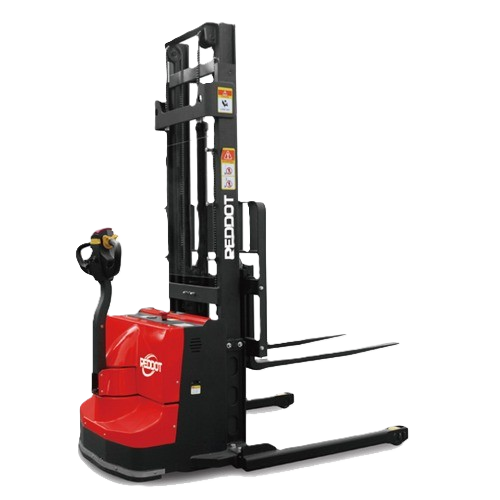
On the other hand, a business whose main requirement is placing pallets into elevated racking needs to consider a different type of equipment. A pallet truck is primarily intended for horizontal transport and low-level lifting, while an electric stacker is designed to lift pallets to storage positions.

Planning a Gradual Transition to Powered Handling
Businesses do not necessarily need to replace every manual pallet truck when introducing powered equipment. A gradual transition can allow motorised pallet trucks to be assigned to routes where they provide the clearest operational benefit.
High-frequency or longer-distance transfers can be reviewed first, while manual pallet jacks remain available for short local movements. This approach also allows the business to assess how powered equipment fits into existing warehouse traffic patterns, charging arrangements and operating procedures.
The mix can then be reviewed as material flow changes. If pallet volume increases or new storage and dispatch areas are introduced, additional routes may become suitable for powered handling.
Frequently Asked Questions
When should a business replace a manual pallet jack with a motorised pallet truck?
Businesses should consider motorised pallet handling when pallet transfers become frequent, travel distances increase or manual movement requires substantial repeated effort. The actual warehouse workflow should be assessed before making the change.
Does a motorised pallet truck completely replace manual pallet trucks?
Not necessarily. Many workplaces can use motorised equipment for demanding or frequent routes while retaining manual pallet trucks for occasional short-distance movements.
Can a motorised pallet truck improve material flow?
It can improve horizontal material movement where manual transport is a recurring bottleneck. It will not resolve workflow delays caused by unrelated processes such as picking, documentation or storage organisation.
What should be checked before introducing powered pallet trucks?
Businesses should review pallet weights, travel distances, movement frequency, route dimensions, floor conditions, operator requirements and battery-charging arrangements.
Is a motorised pallet truck suitable if pallets need to be stacked?
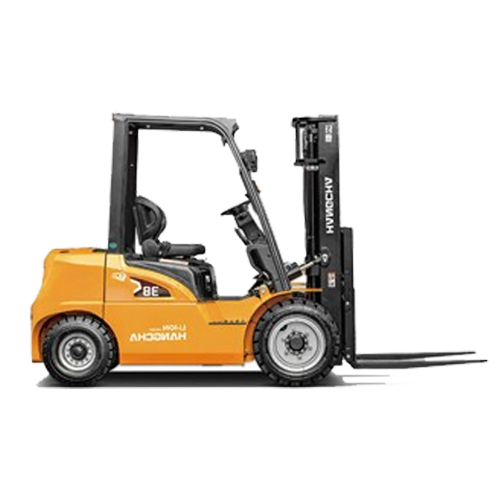
A motorised pallet truck is primarily designed for horizontal pallet transport. If pallets need to be raised to elevated storage positions, an electric stacker or forklift may be more appropriate.
Knowing When Manual Handling Has Reached Its Practical Limit
The point for switching from manual to motorised pallet trucks is usually reached when the warehouse workload has changed enough that manual movement no longer fits the way goods flow through the facility.
Frequent pallet transfers, longer routes, heavier regular loads and increasing physical effort are useful indicators to review. Warehouse expansion and higher operational volume can also change equipment requirements even when the pallets themselves remain unchanged.
The decision does not need to be an all-or-nothing replacement. Businesses can introduce powered pallet handling where it provides the greatest operational benefit while continuing to use manual equipment for suitable lower-frequency tasks.
Enquire About Moving from Manual to Powered Pallet Handling
When manual pallet movement starts taking up more time or physical effort, the next step is to look closely at where and why that movement occurs. Daily pallet volume, typical load weights, travel distances, pallet dimensions and warehouse routes provide a more useful starting point than simply choosing a higher-capacity truck.
For businesses considering a switch to powered pallet handling, get in touch with Tysen Technologies with details of your current manual handling setup and operating requirements. Our team can review relevant motorised pallet truck options based on how pallets actually move through your facility.


